Apr 07, 2026
3 min read
“Form is a diagram of forces.” — Sanford Kwinter
This project didn’t start with a form in mind, but rather with a set of rules.
I’ve been working with pattern systems for a while, mostly in a digital space, but here the intention was slightly different. Instead of producing images, I wanted to understand how a system would behave if its output acted as a set of directives for manufacturing processes such as CNC milling, laser etching, and 3D printing.
Considering the discretization of the pattern, I knew early on that it needed to generate seamless, rotation-enabled units. The aim was to produce continuous fields across larger assemblies while maintaining a logic that could be easily repeated and recombined.
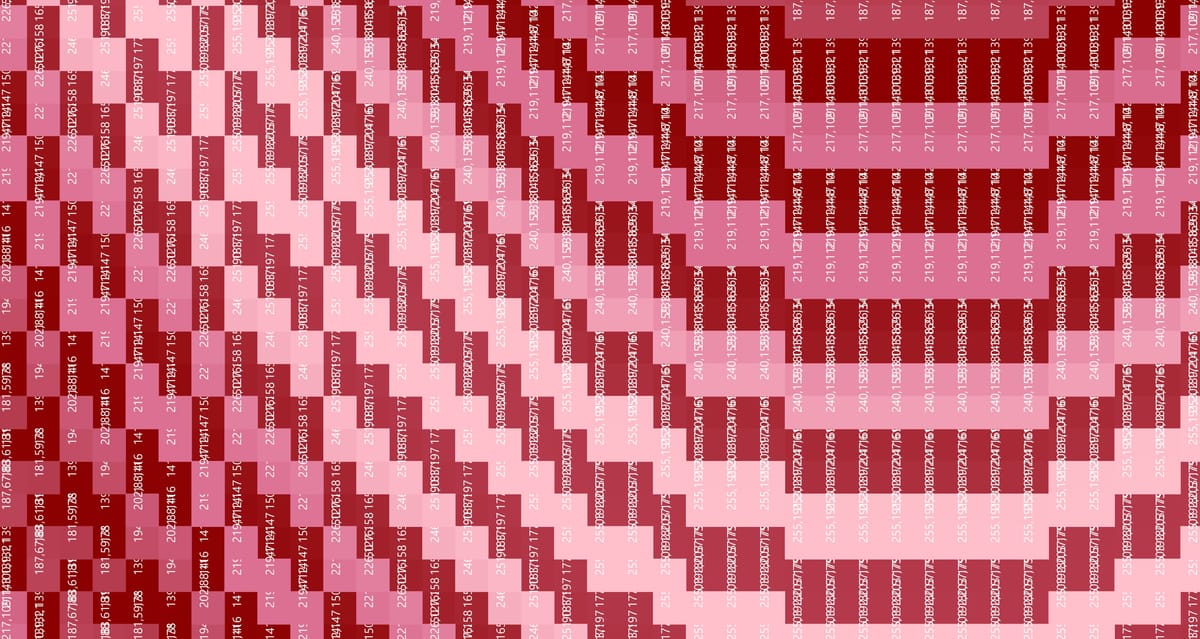
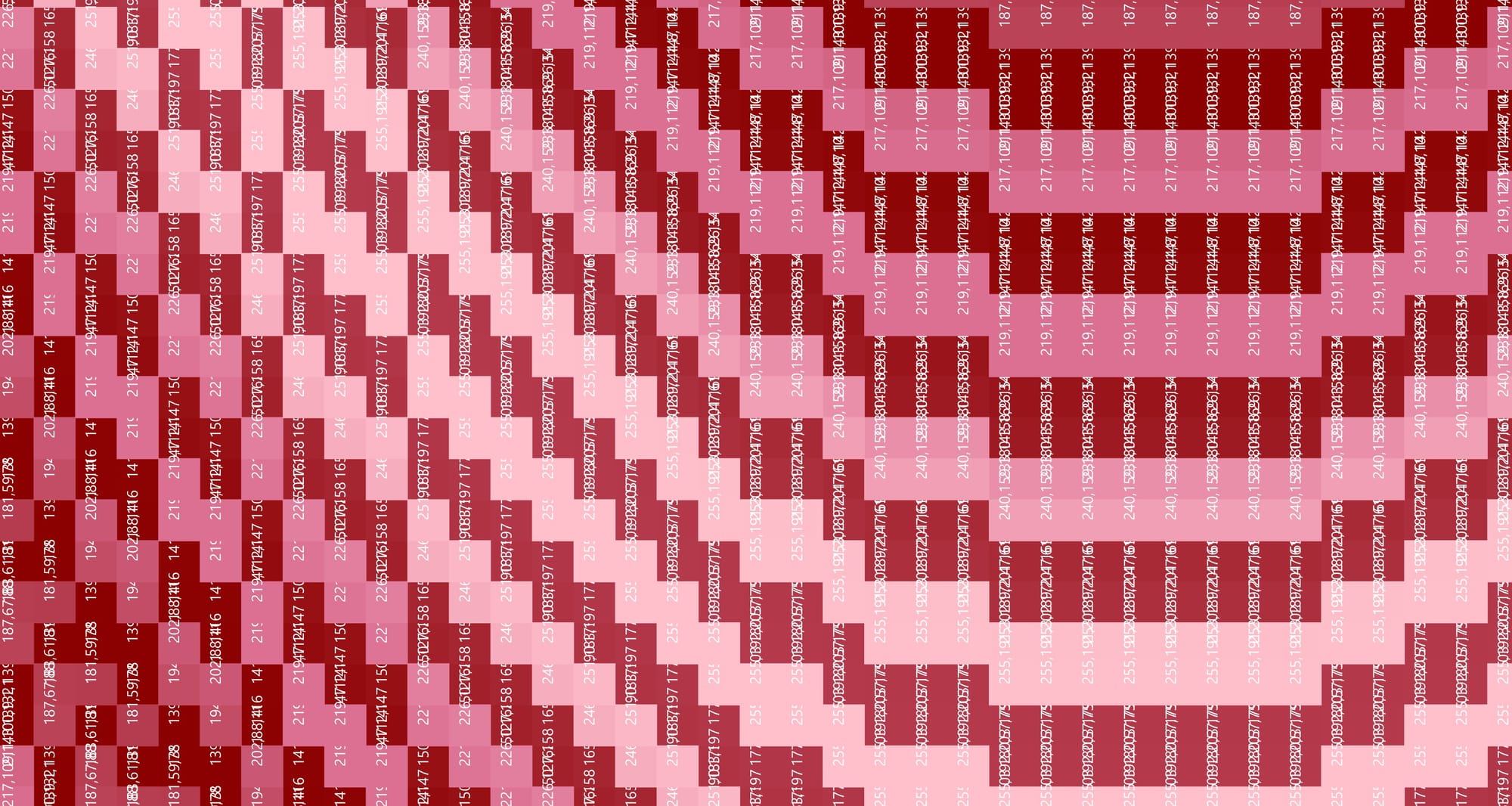
I began treating the pattern less as geometry and more as a data management system. A simple grid, controlled by basic mathematical functions, became enough to produce a flowing, continuous pattern without heavy post-processing. The key operation was the shuffling of data within that grid. Control over this shuffling became the main way of steering the pattern itself.
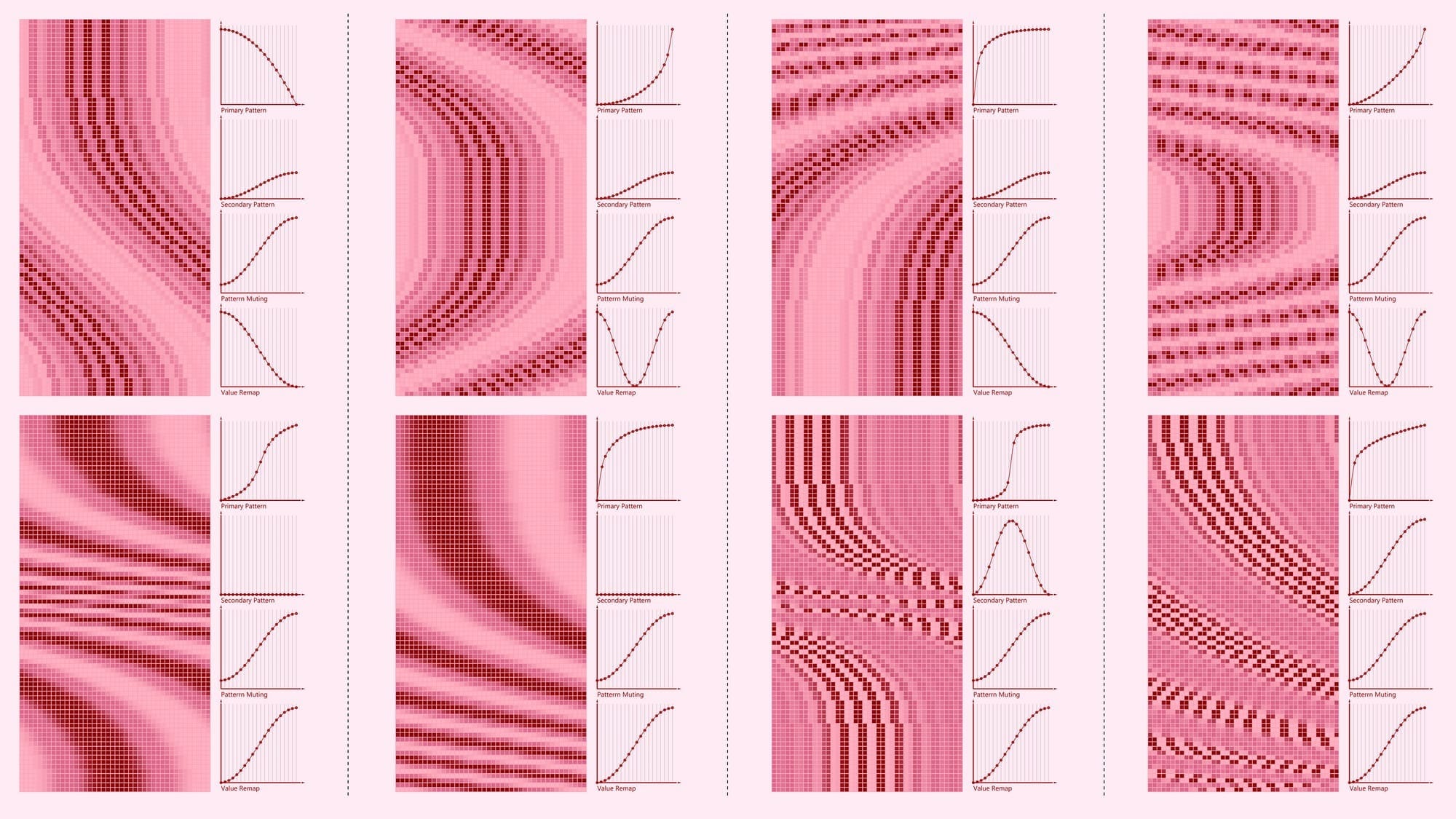
What became interesting was that this also allowed for modules that didn’t immediately read as seamless or symmetrical. I wasn’t particularly interested in producing a fully homogeneous field. Instead, moments of tension and release within the pattern became a way to introduce variation while still operating within a modular system.
0:00
/0:37
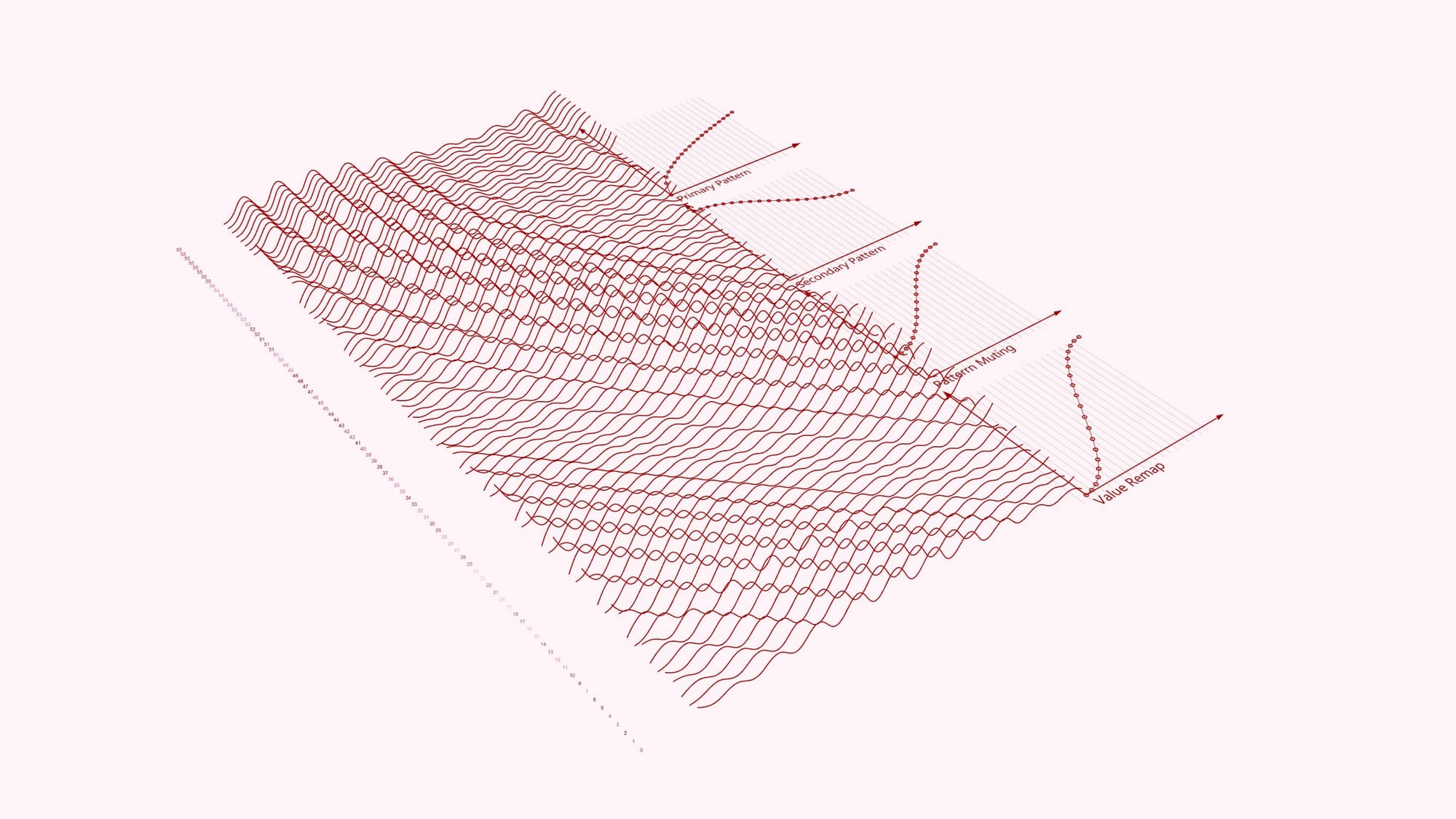
The pattern itself remained abstract. The shuffled data could be translated into different geometric outputs depending on the context. In some cases, it would define a curve, with its amplitude in Z controlled by the pattern. In others, it would operate more like an image, where pixel values could drive things like laser etching intensity.
The ability to rotate tiles within the grid introduced another layer of flexibility. By remapping values and redistributing them across the field, the system could produce multiple readings of the same underlying structure. This made it possible to focus on tuning the behaviour of the system itself, rather than correcting it afterwards to make it tileable.
I also approached the pattern through layering. A dominant, larger-scale structure could be combined with a finer, more granular pattern, allowing different levels of information to coexist within the same piece. This created additional depth without increasing the overall complexity of the system.
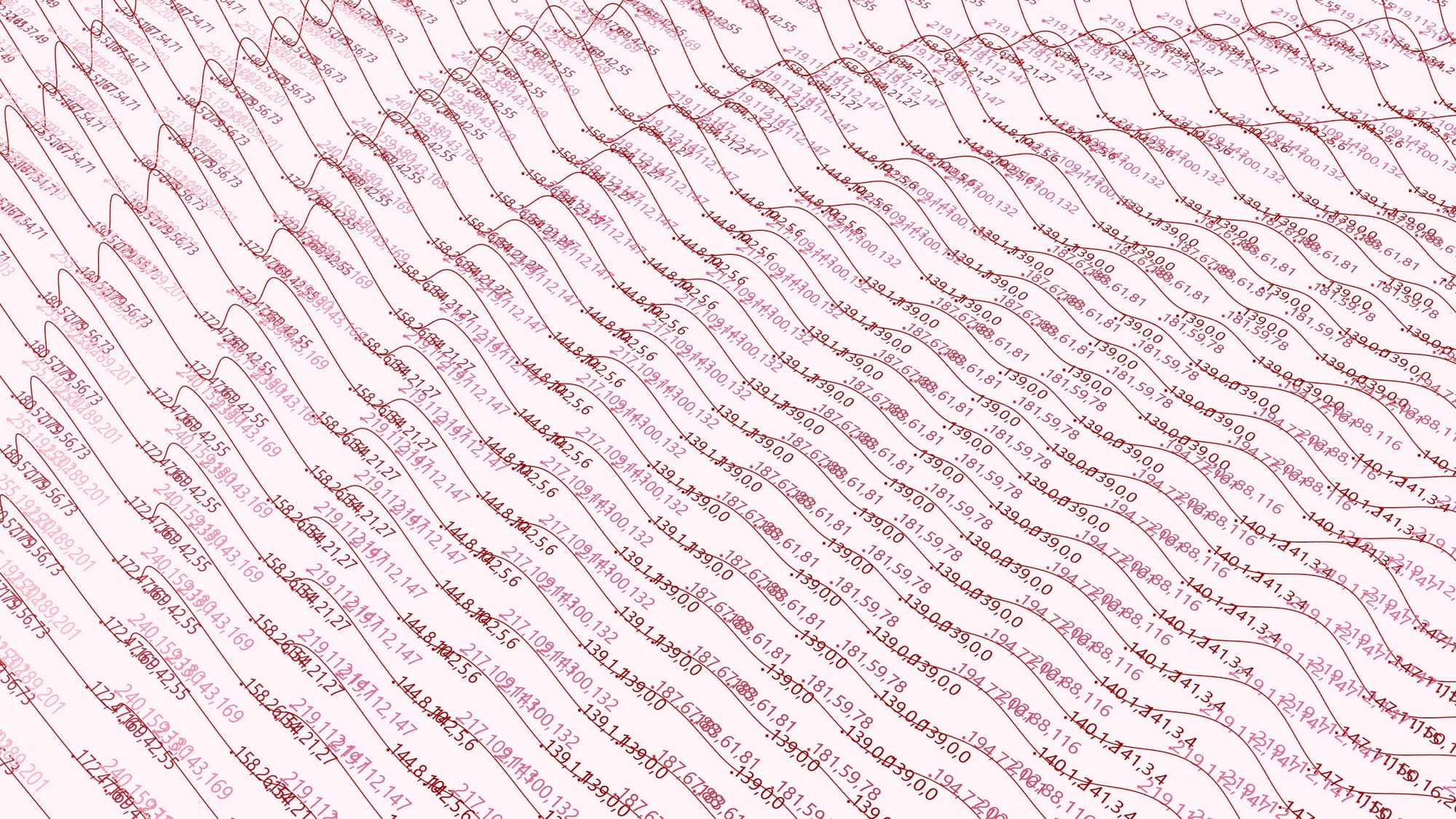
At a certain point, the exercise stopped being purely abstract. The data could no longer exist only as something to be visualised, it had to be translated into instructions that machines could interpret.
That shift reframed the digital model. It was no longer a representation of a form, but a set of instructions anticipating how it would be cut, etched, or printed.
This project was developed with support from Arts Council England through the Developing Your Creative Practice (DYCP) programme. The funding enabled a period of focused research and experimentation, exploring the translation of computational design systems into physical making processes.