May 06, 2026
5 min read
“To repeat is to behave in a certain manner, but in relation to something unique or singular which has no equal or equivalent.”
― Gilles Deleuze
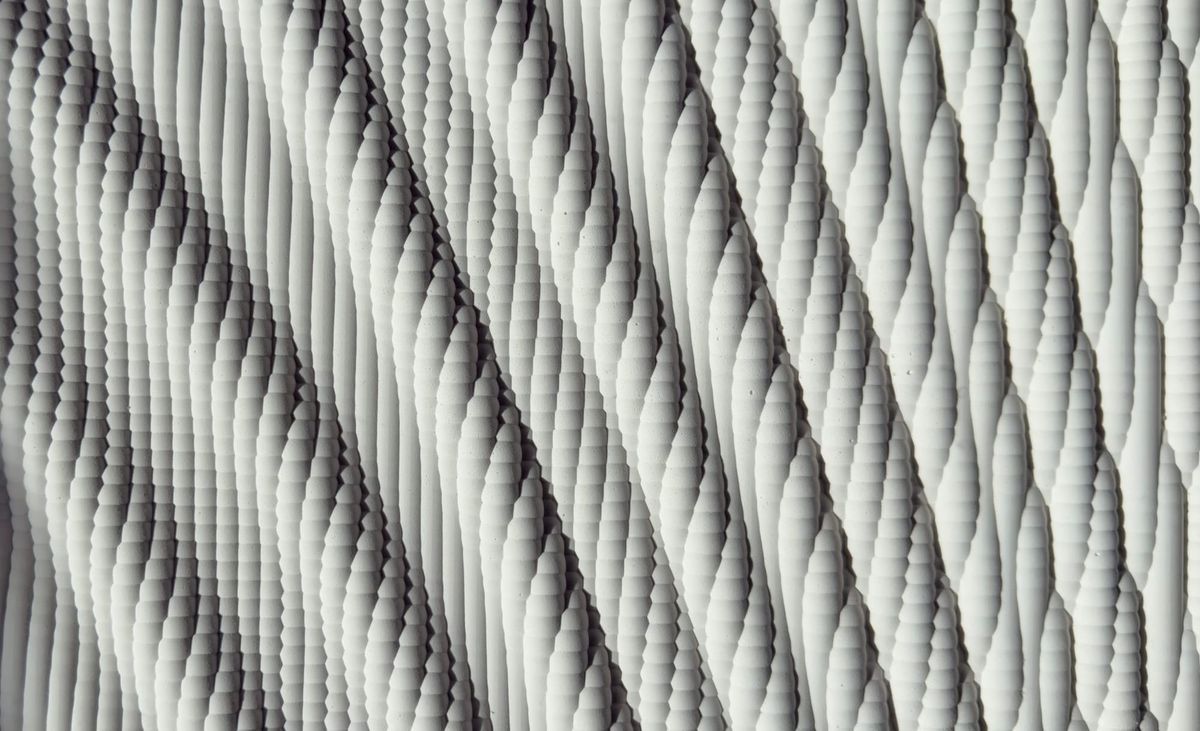
While the project began through computational design and digital fabrication, a major part of the research focused on replication, specifically how a single computational surface could be transferred, inverted, reproduced, and materially transformed through moulding and casting workflows.
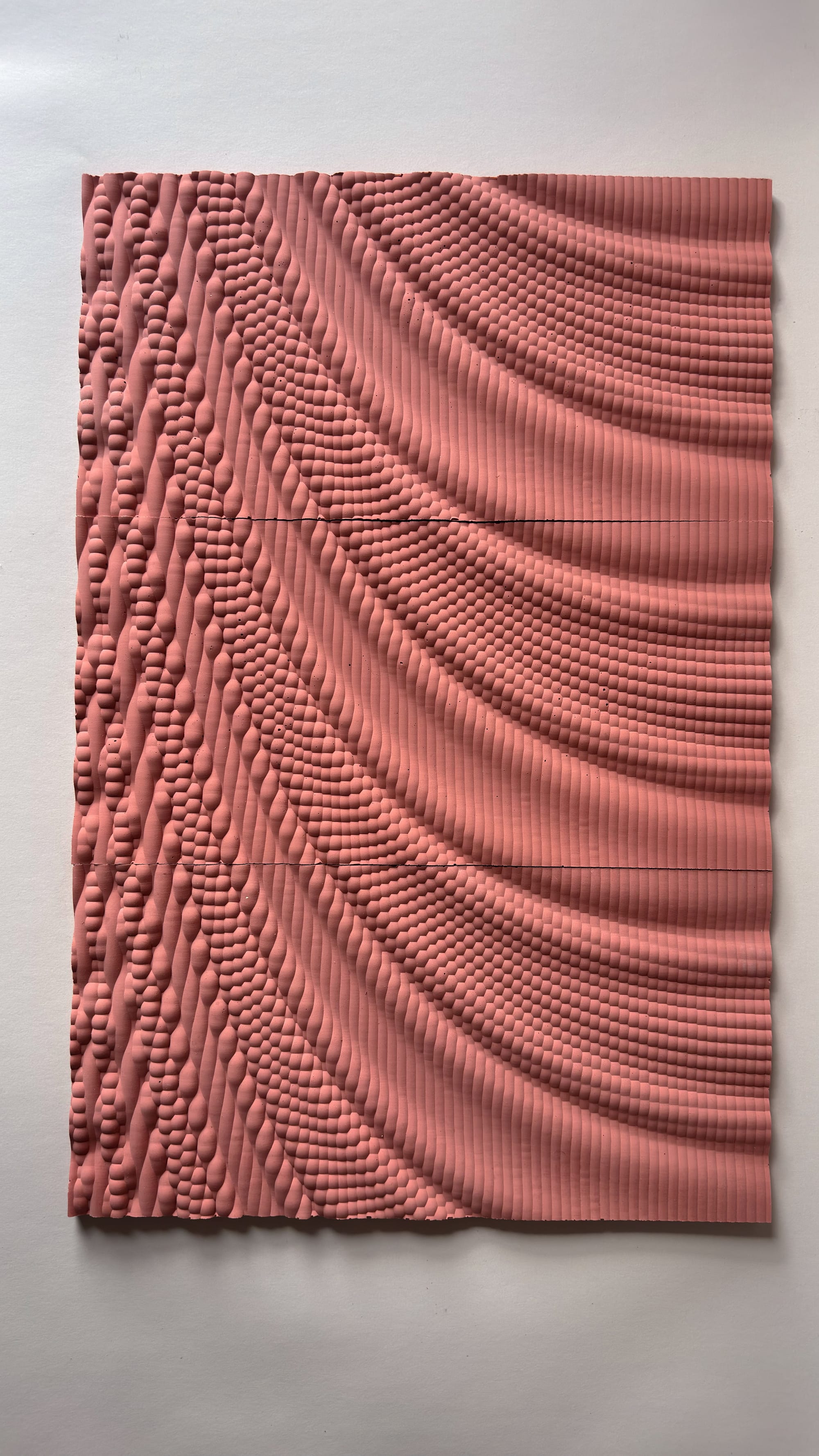
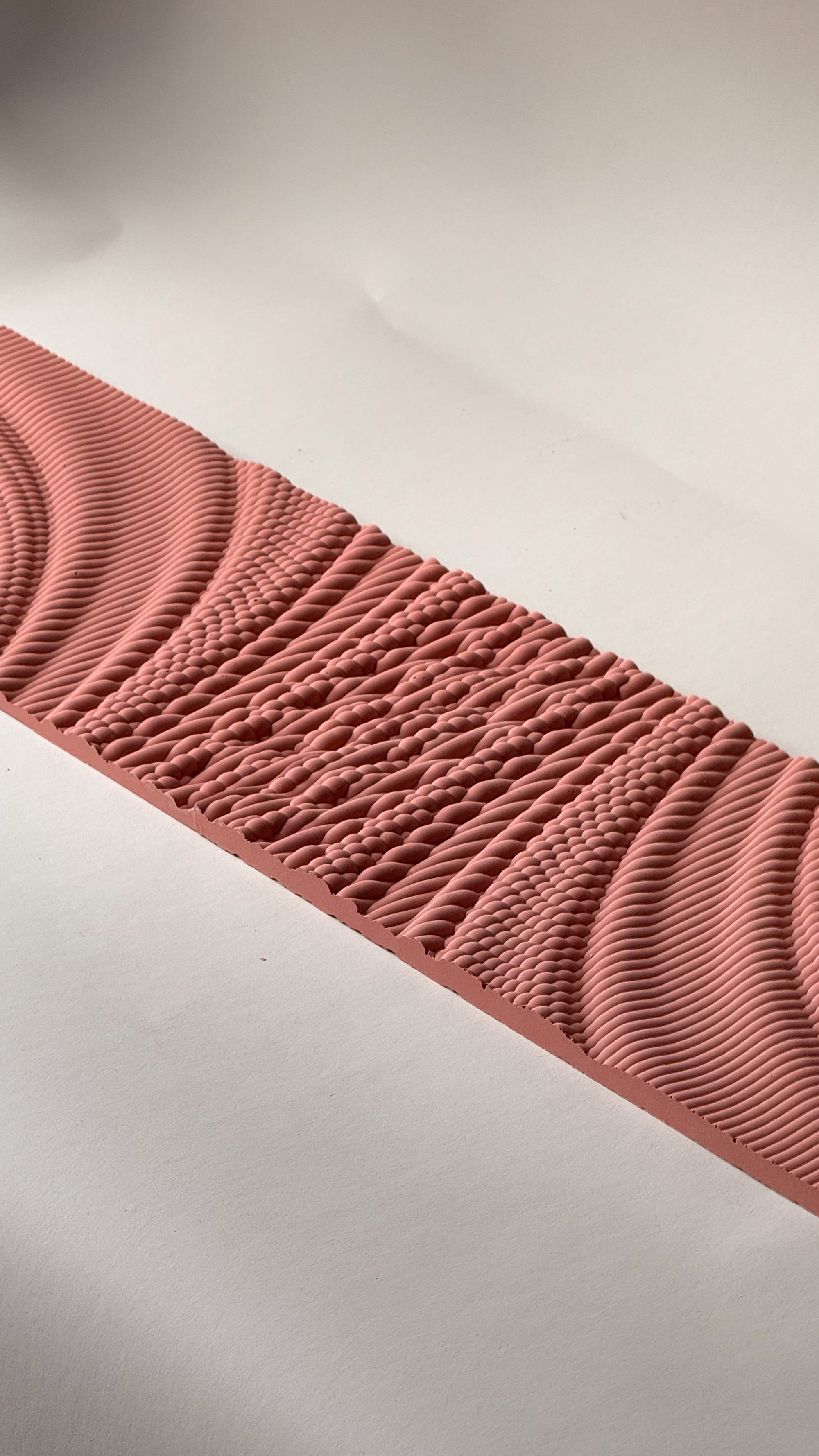
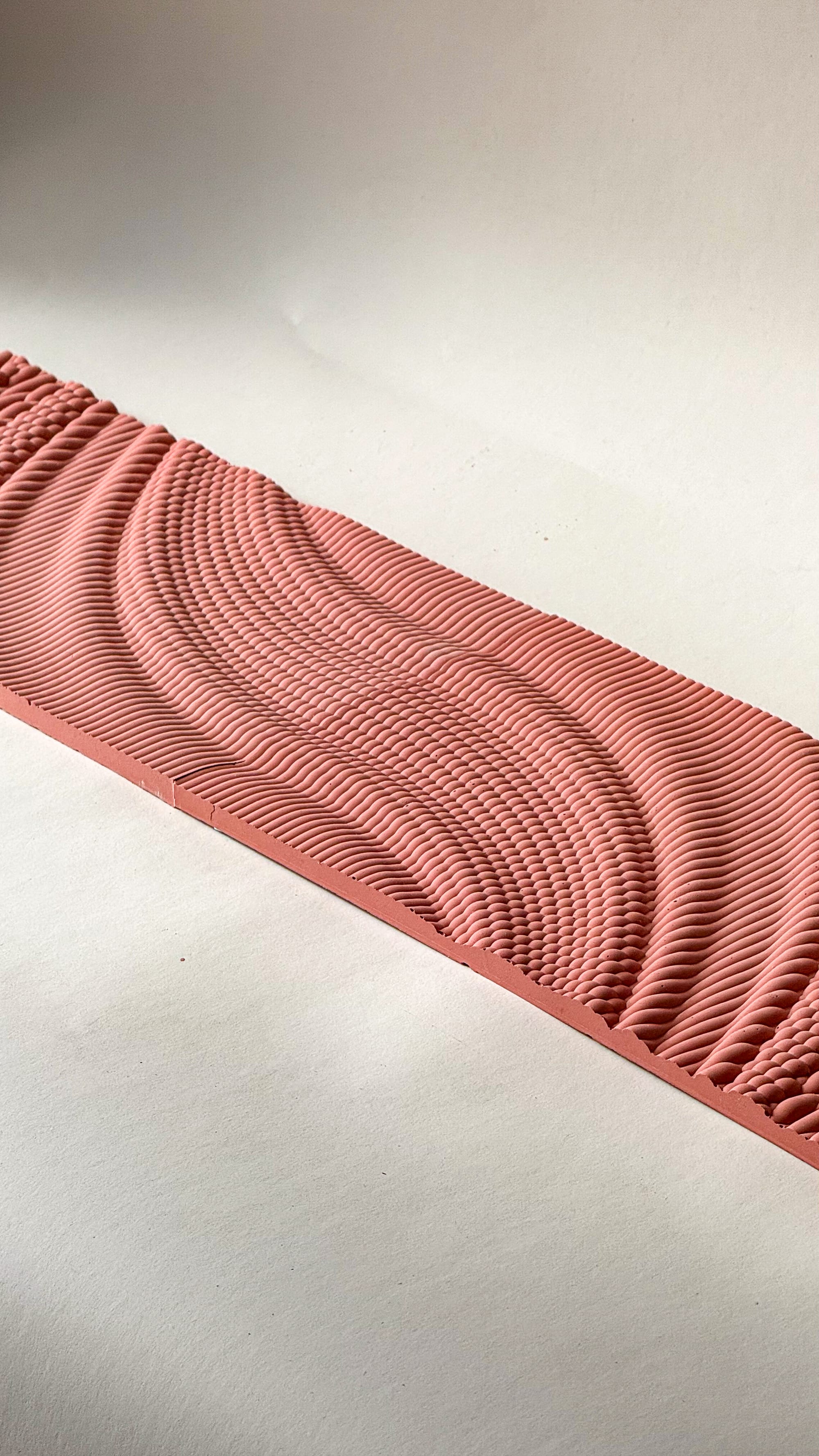
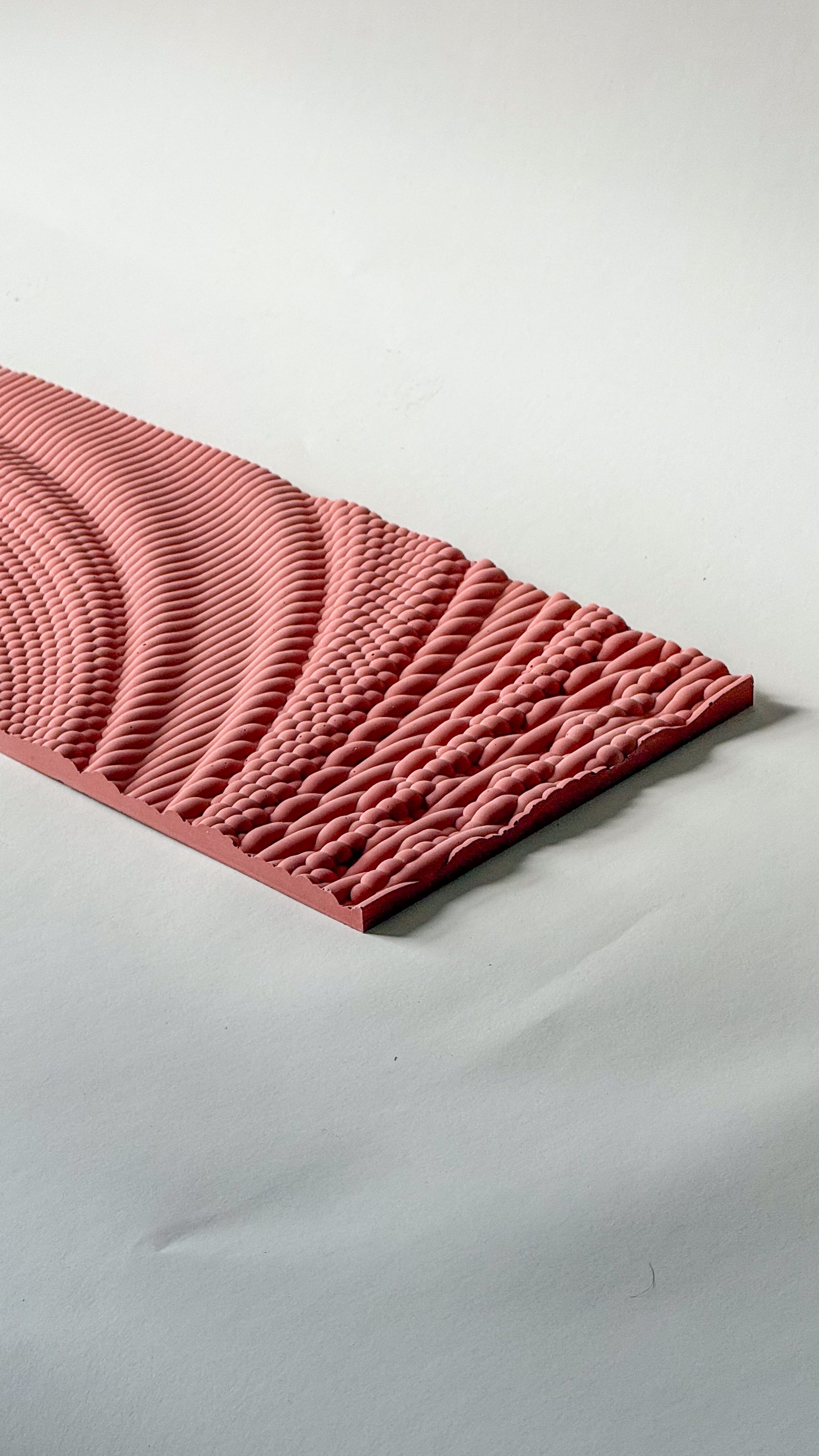
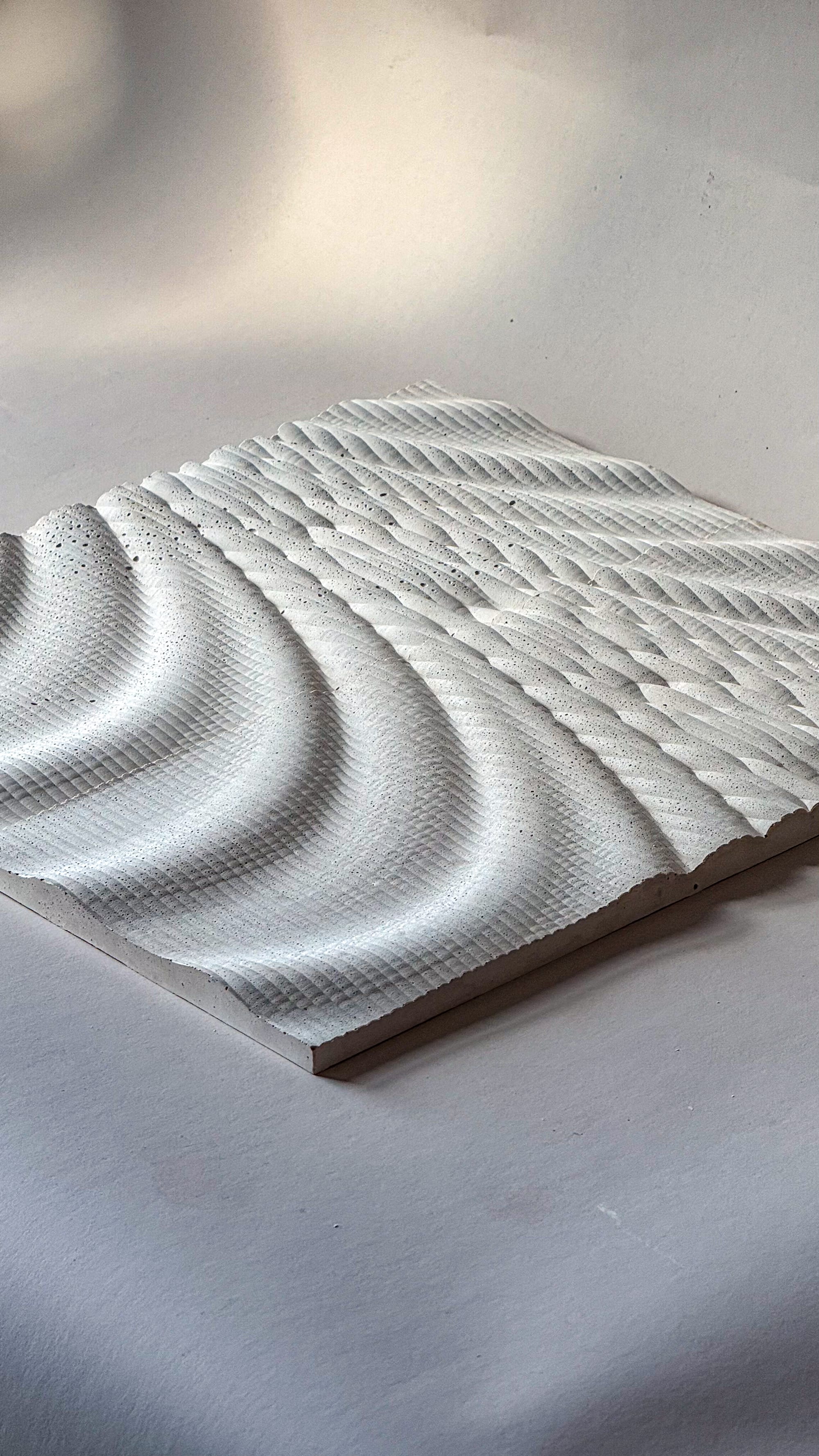
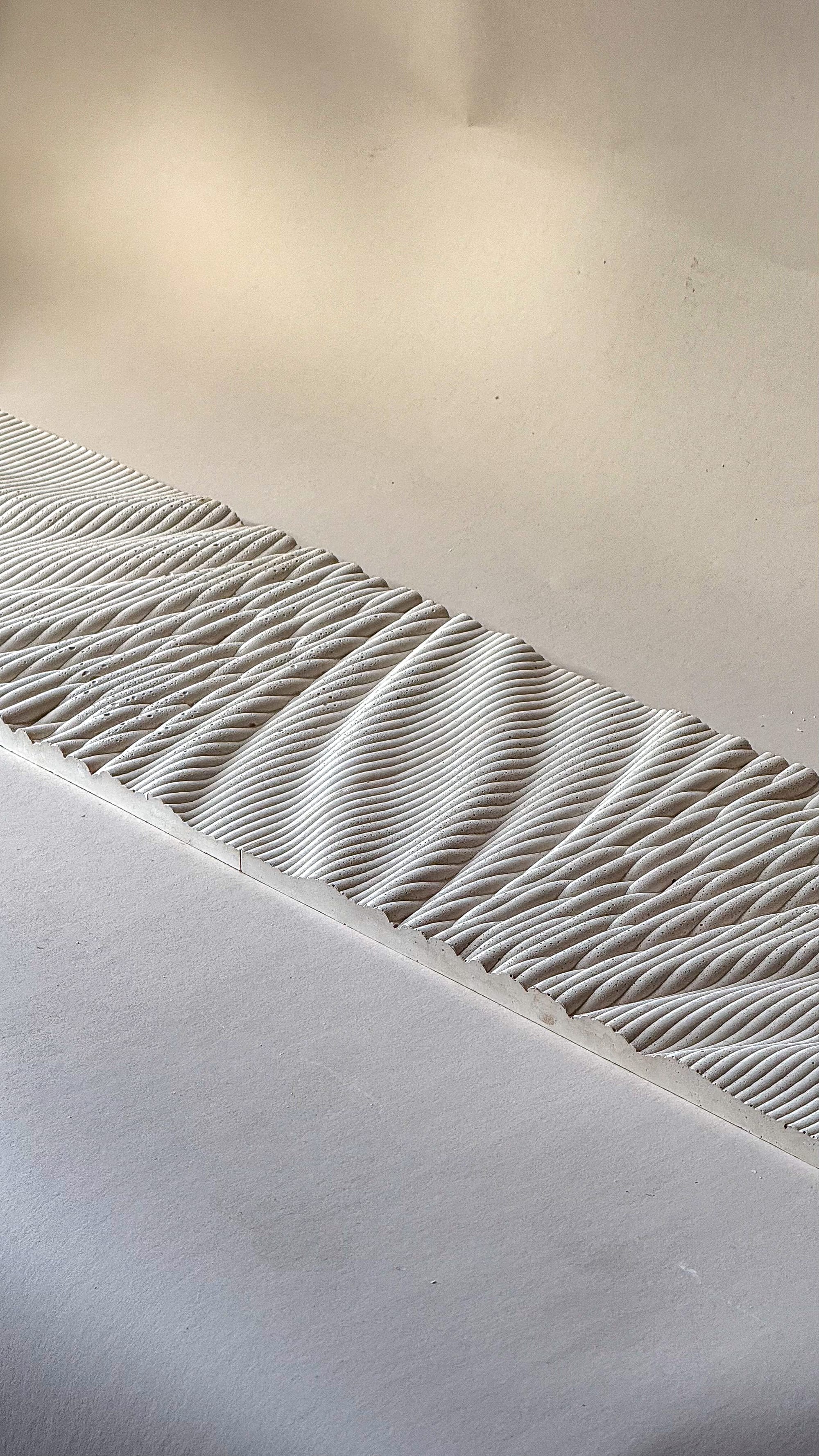
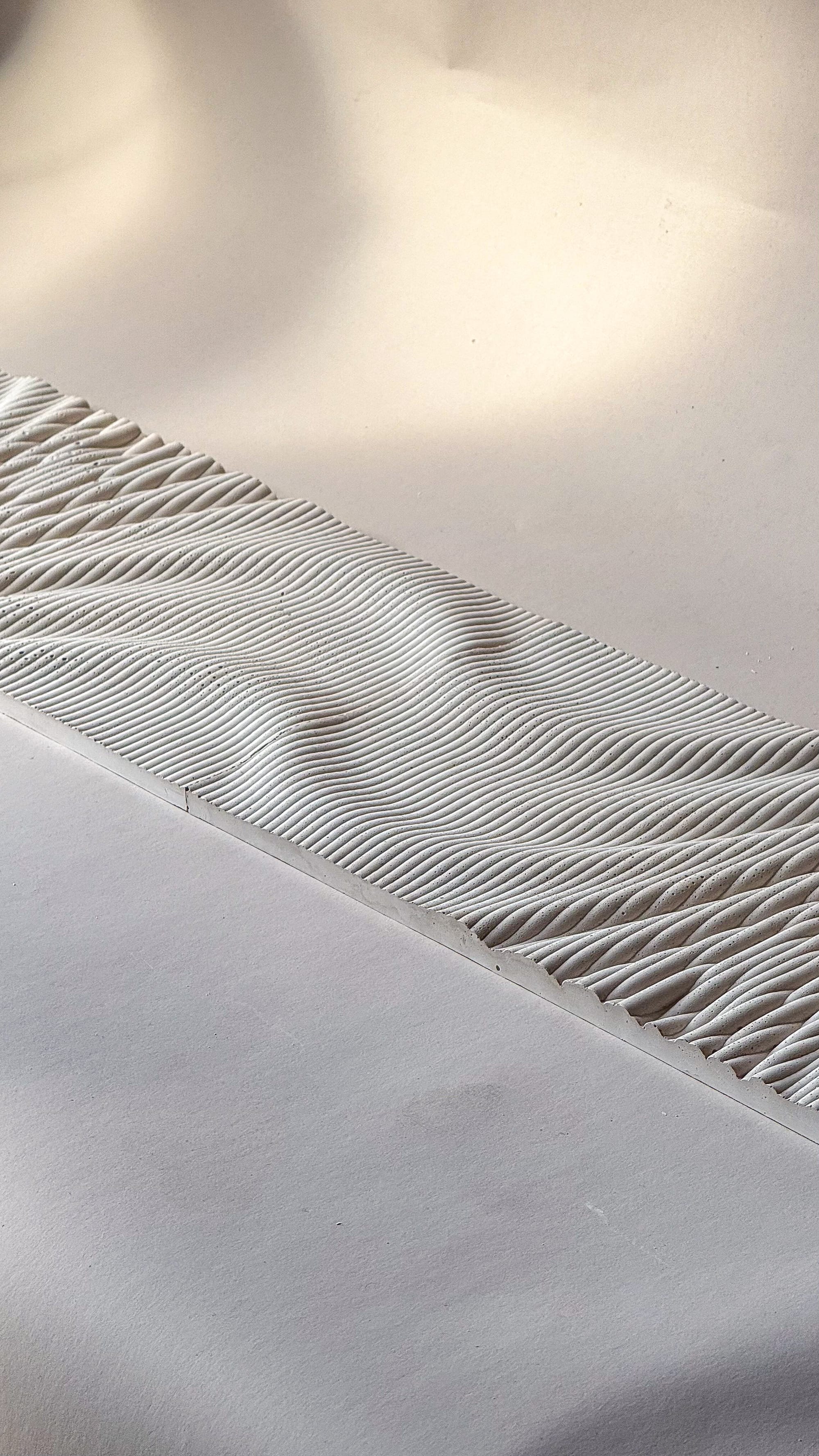
The replicative phase introduced a different kind of logic into the project. Unlike direct digital fabrication processes, where geometry is produced immediately from machine instructions, mould-based workflows introduce interpretation, delay, material instability, and accumulated variation. The same pattern system could now exist across multiple material states and generations: as a CNC-milled positive, a silicone negative, a plaster press mould, a cast object, or a ceramic surface.
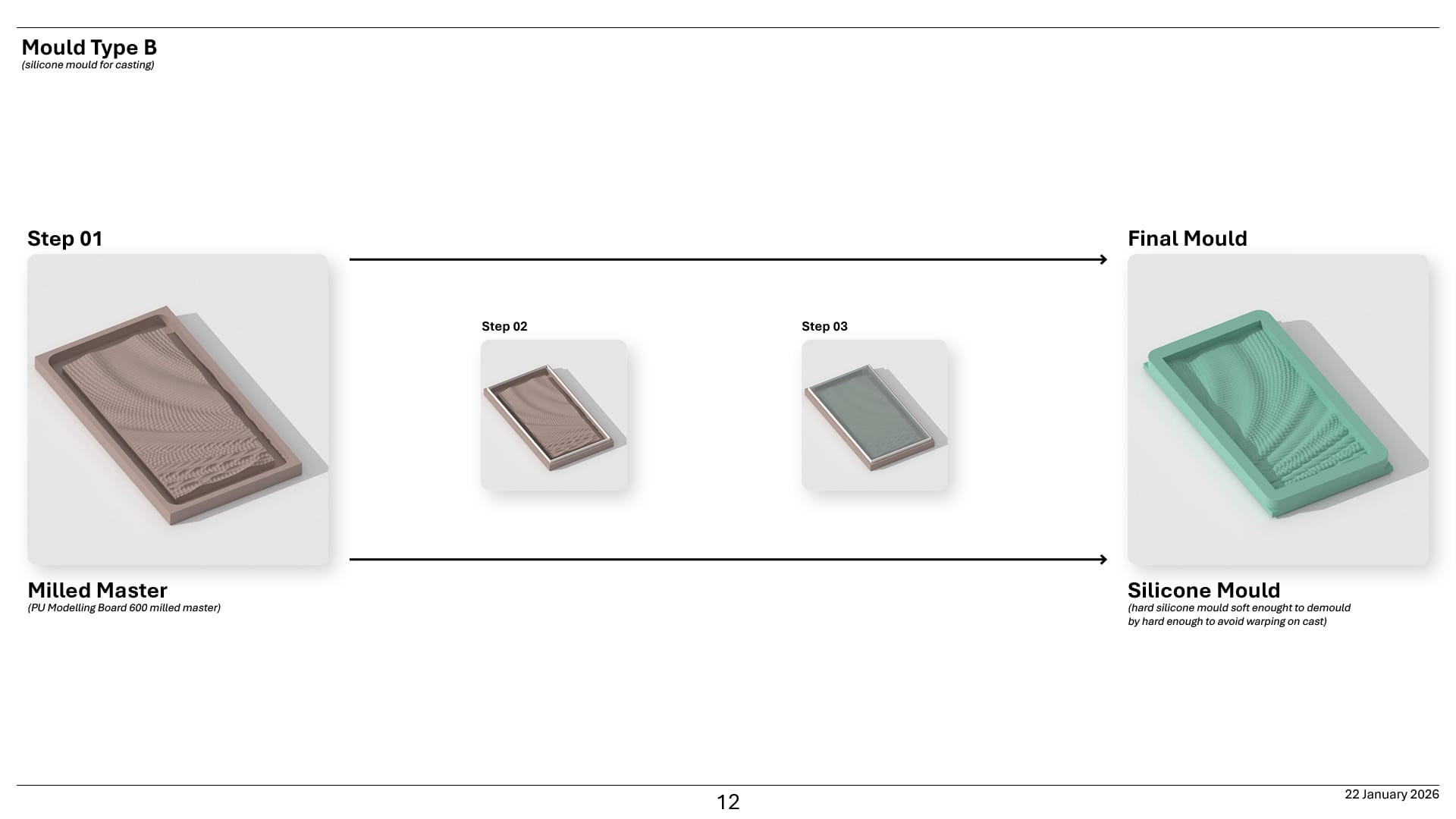
Silicone Moulds
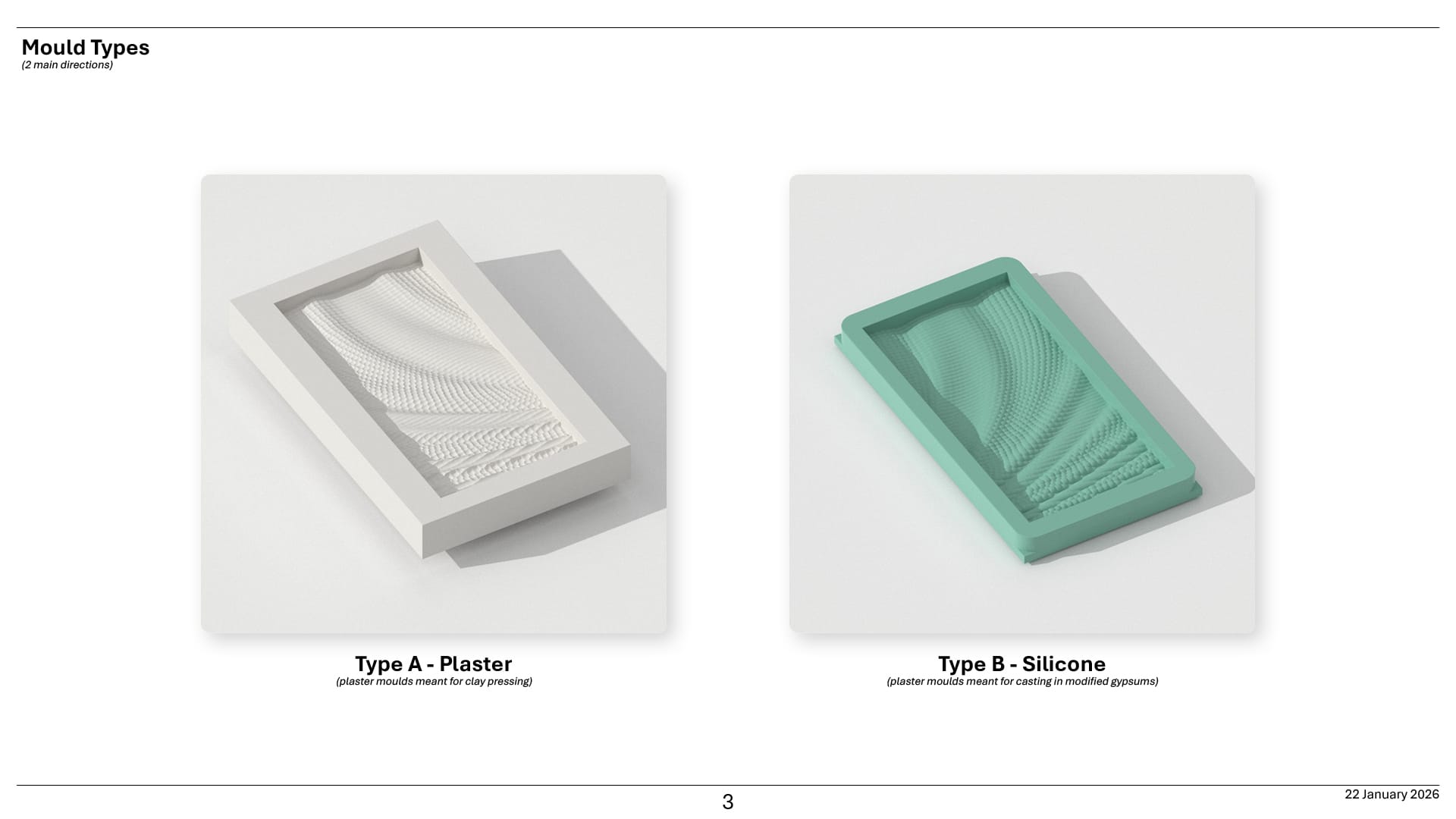
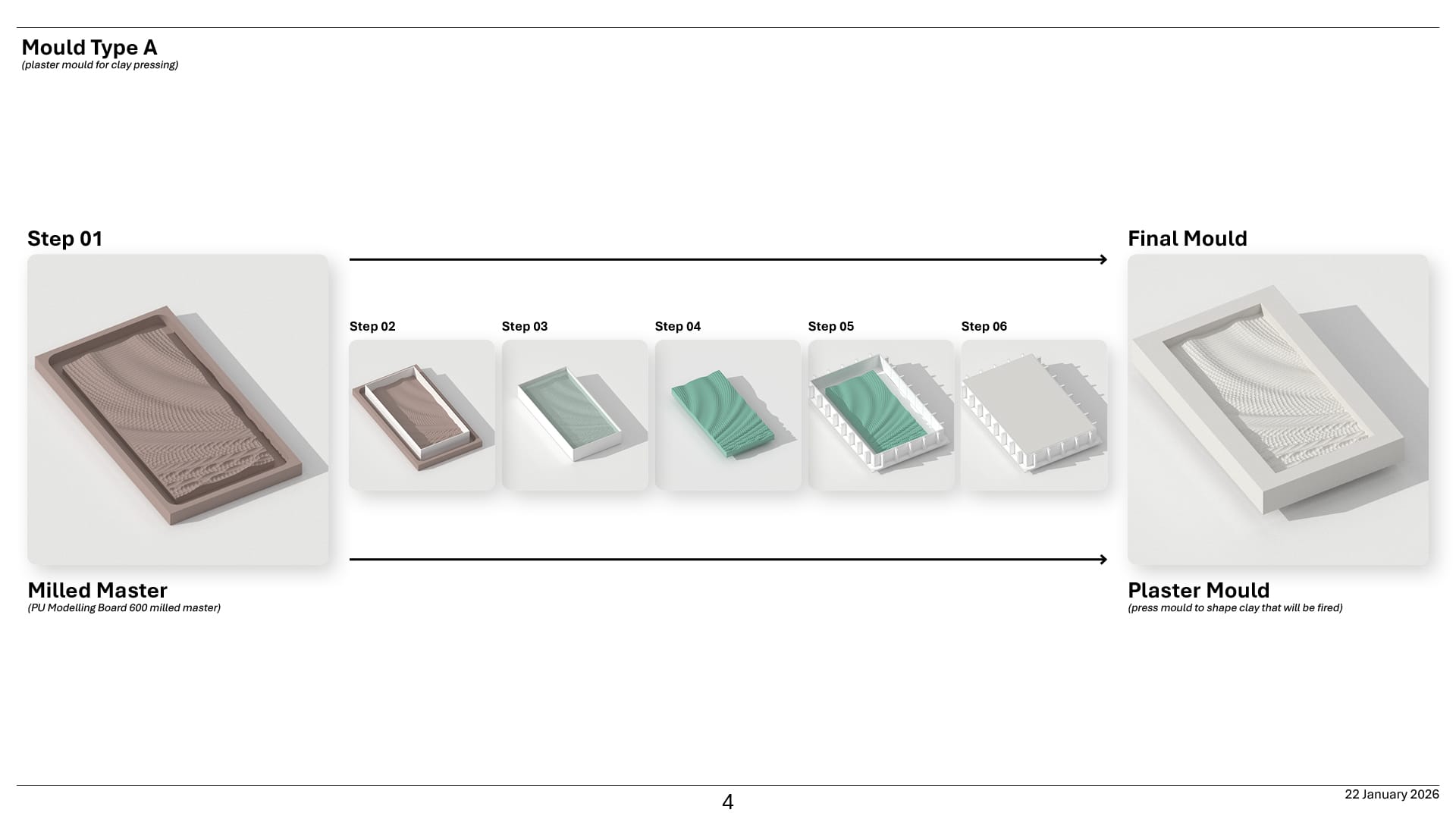
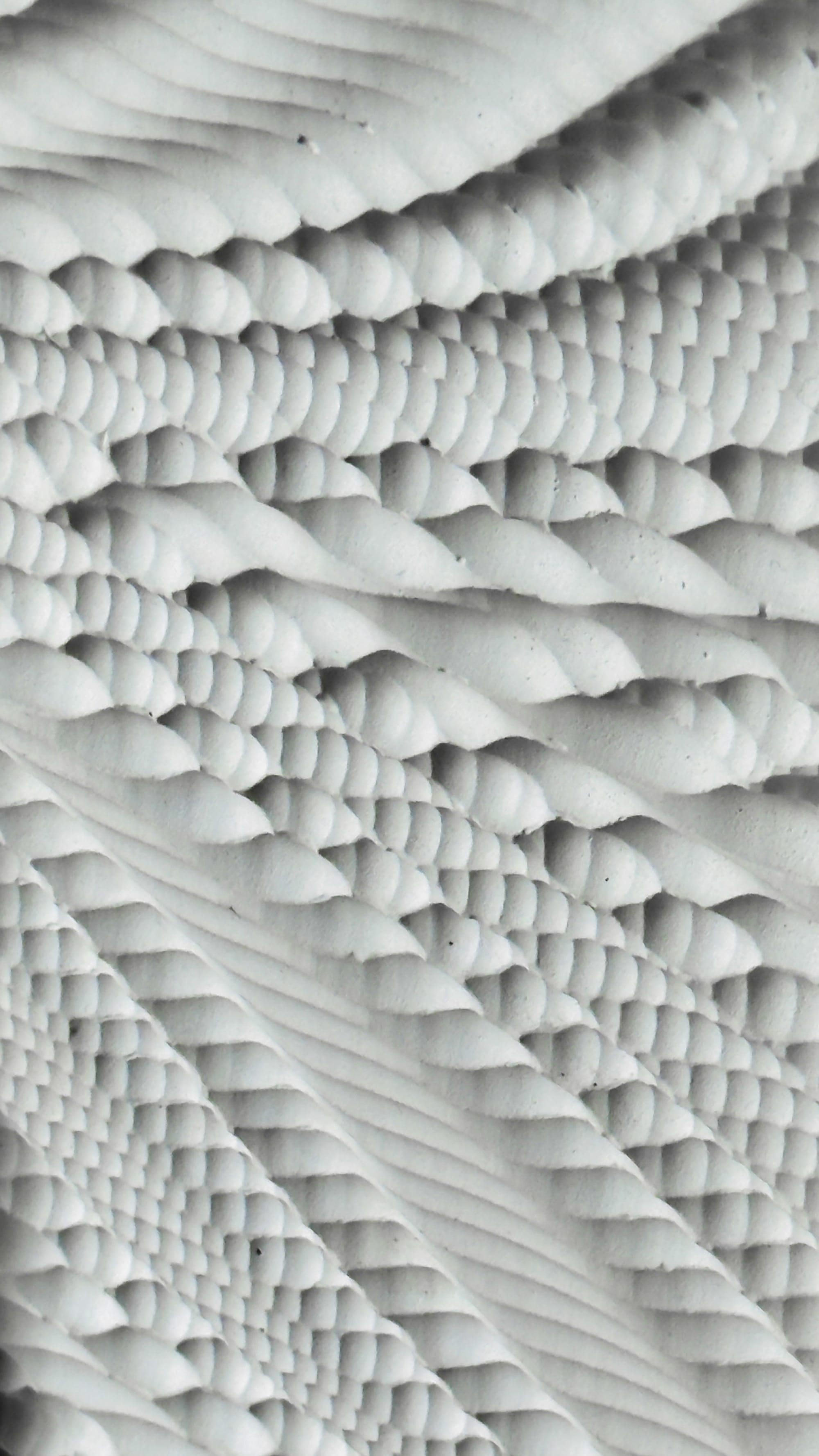
The process typically began with CNC-milled PU board masters produced from the Grasshopper-generated geometry. These acted as high-resolution positives that could then be translated into two distinct moulding systems depending on the target material and fabrication process.
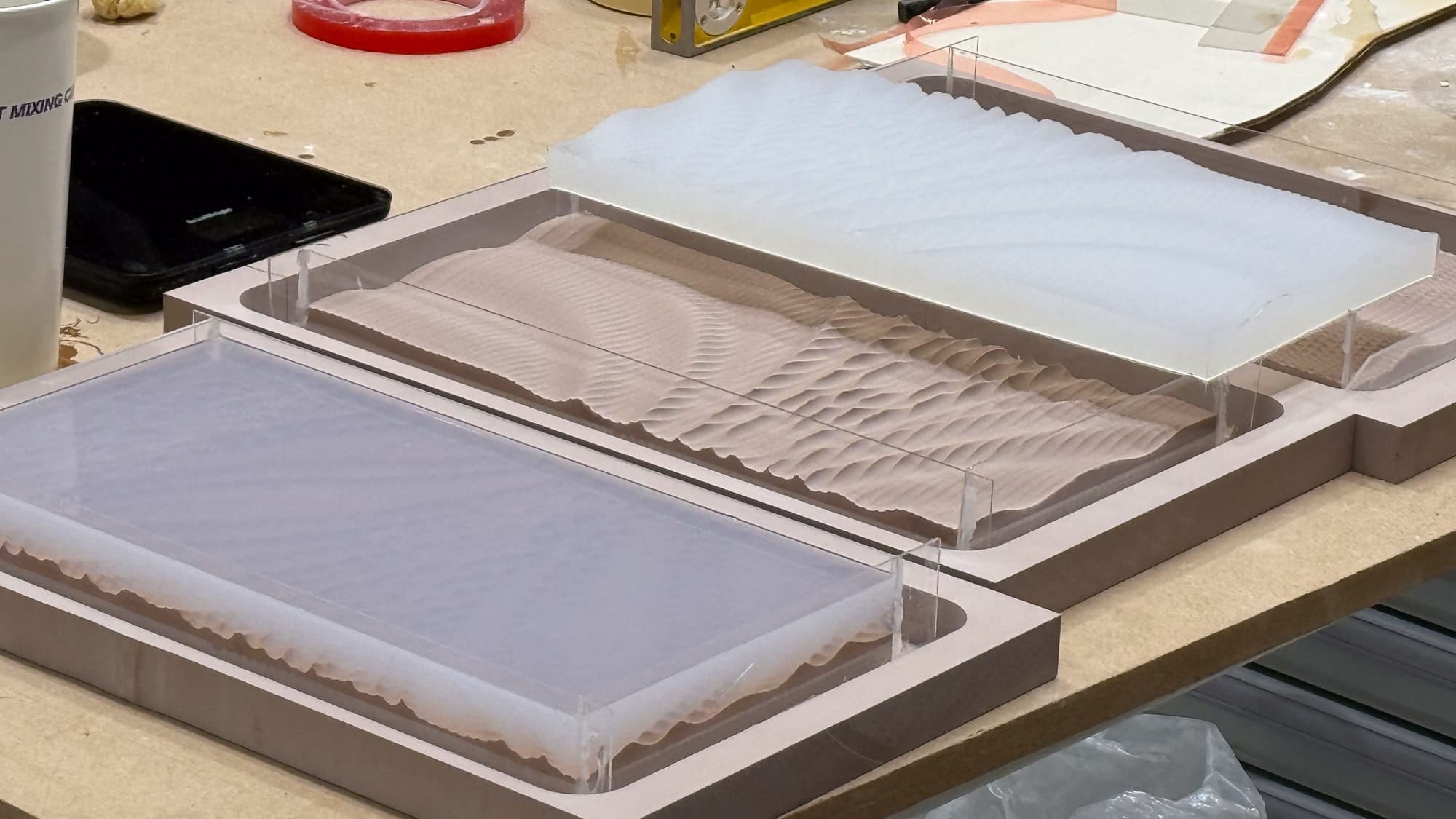
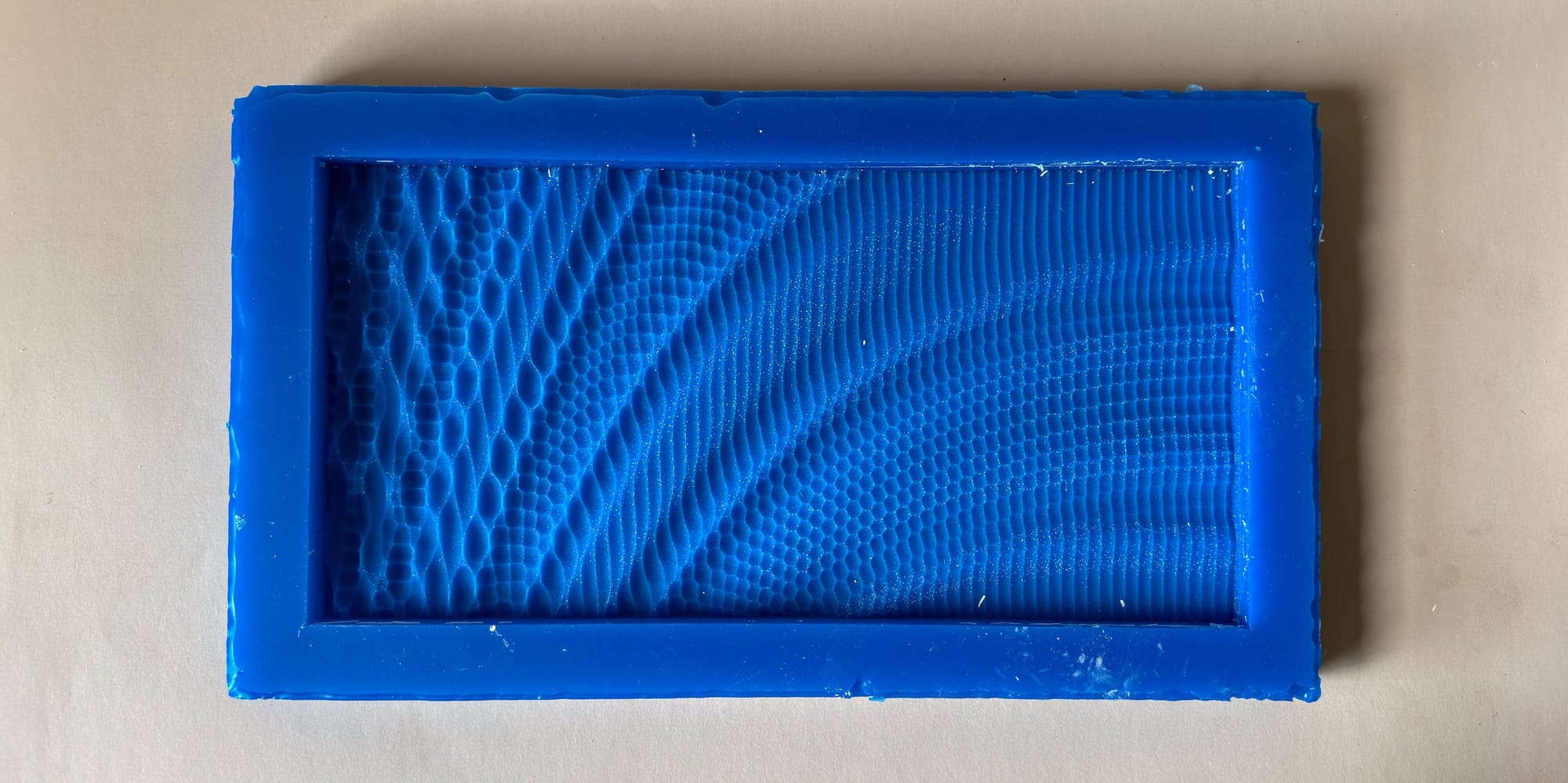
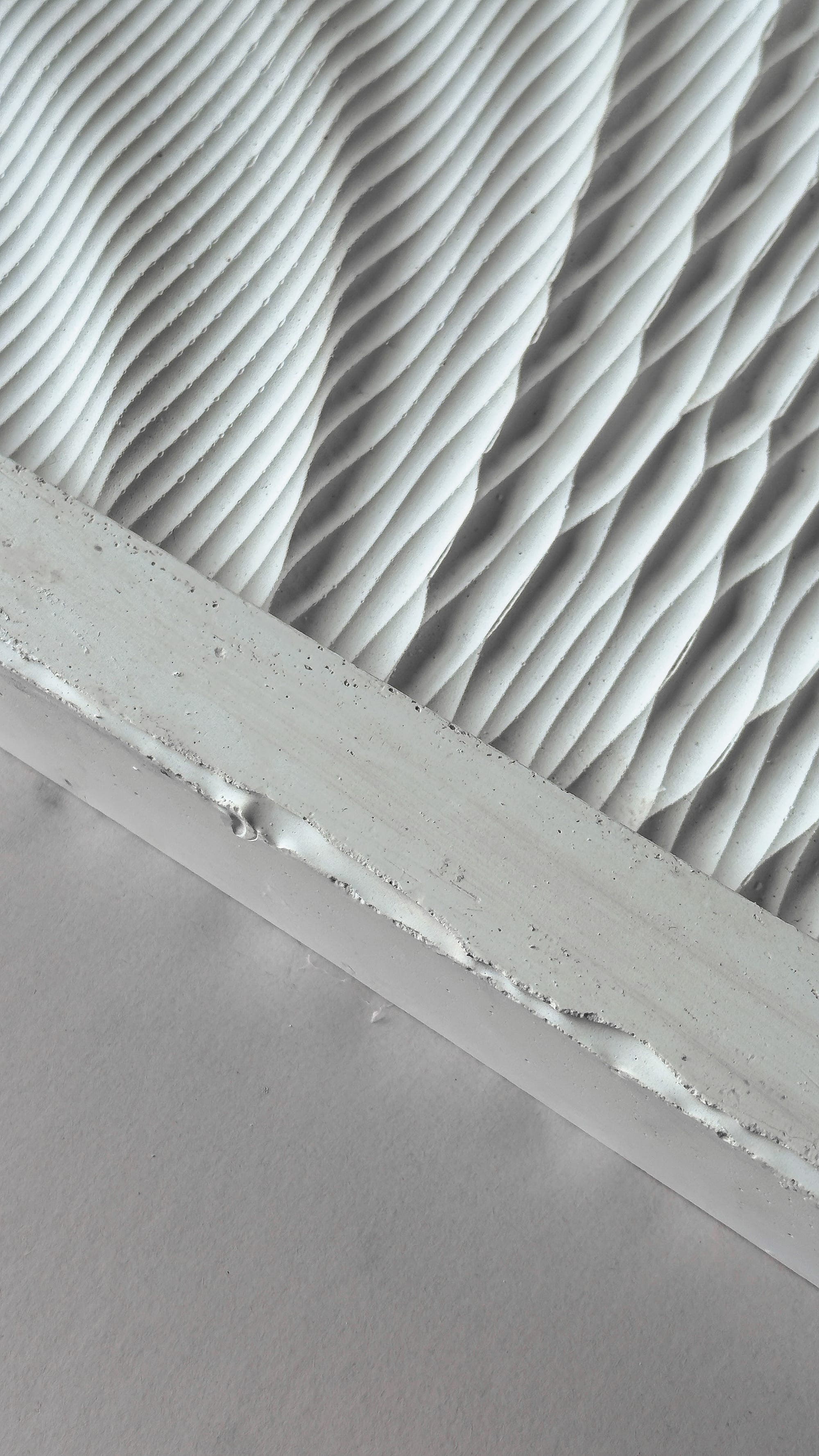
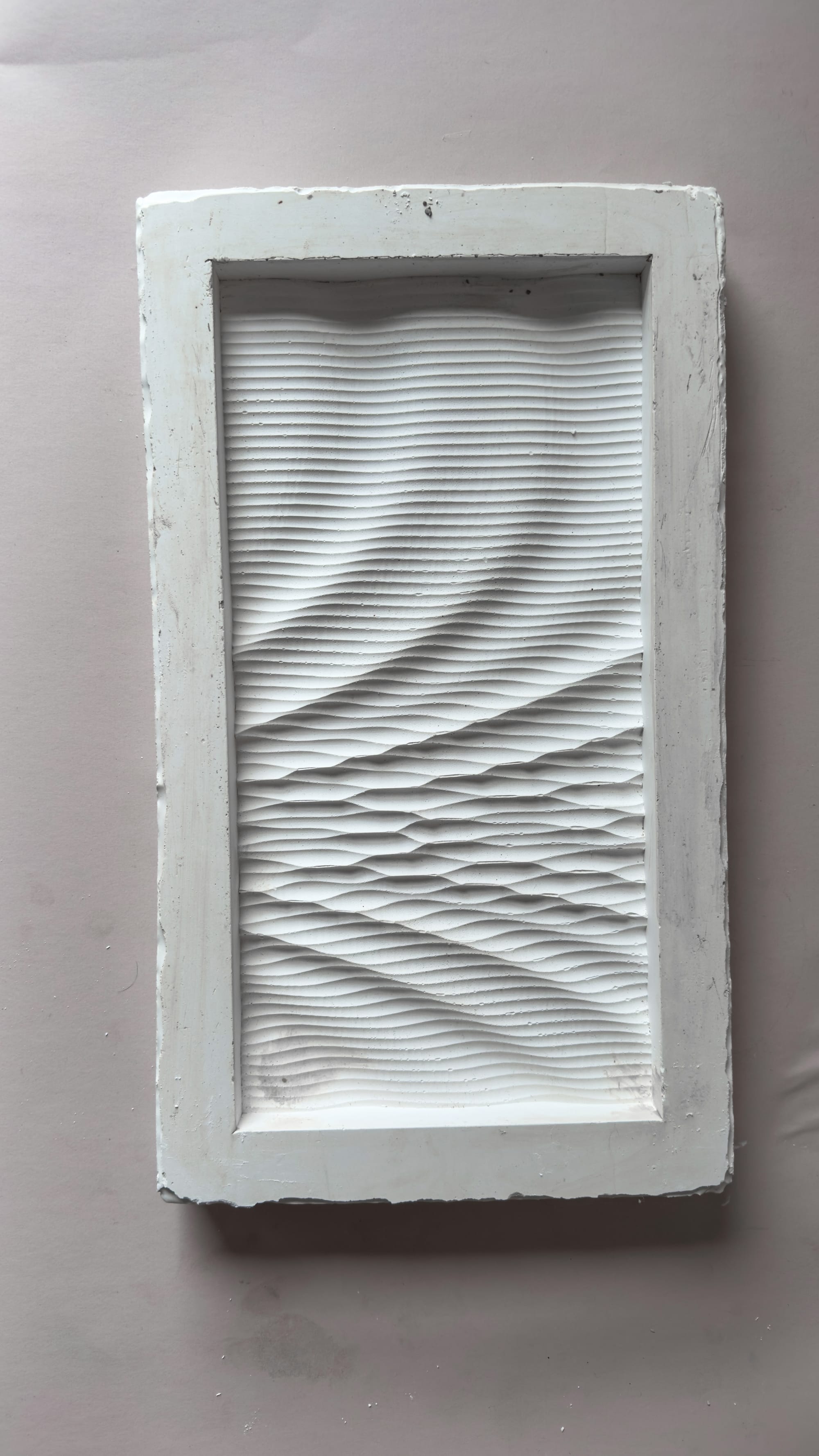
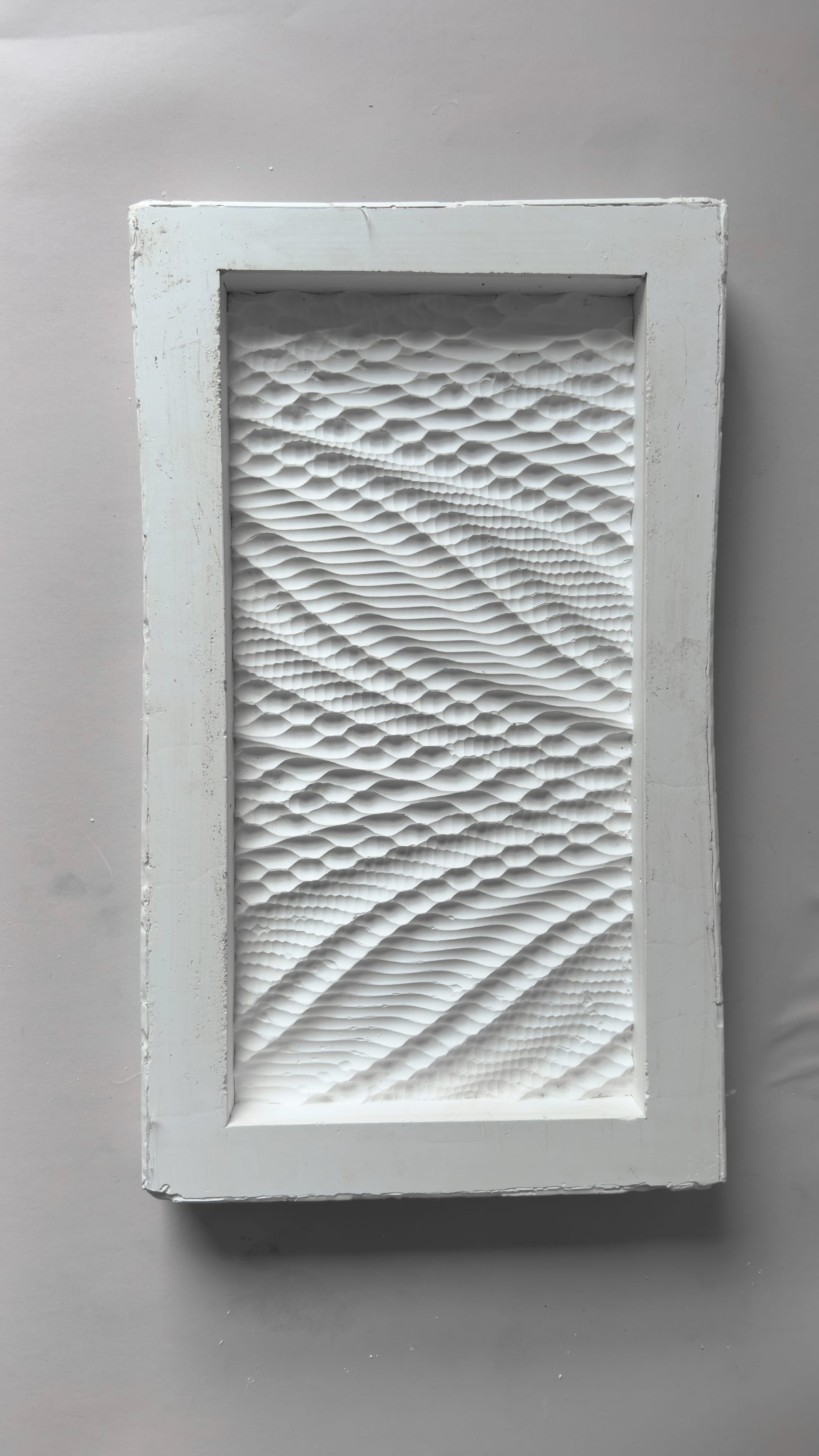
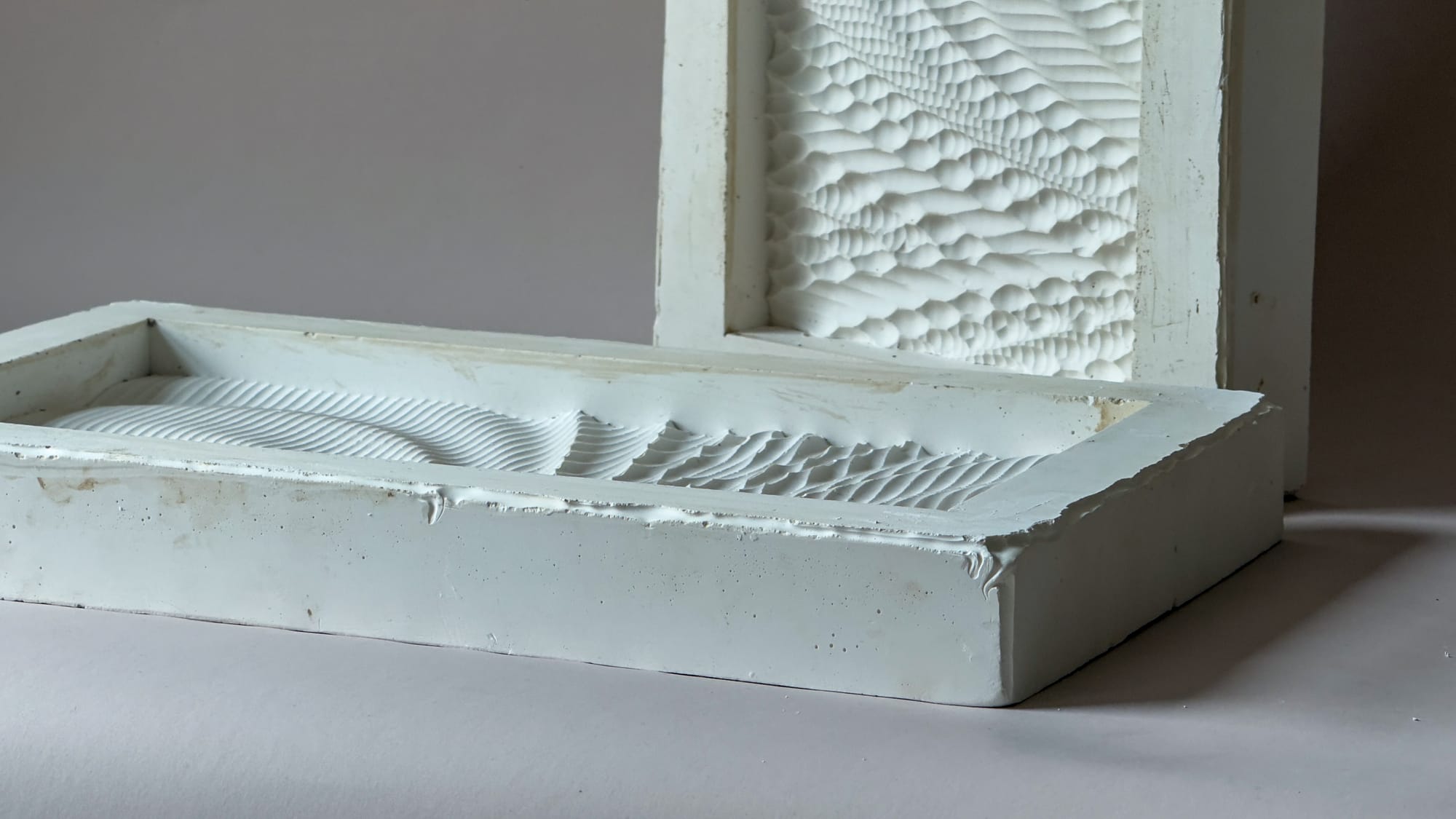
Silicone moulds were primarily used for casting modified plaster composites and other liquid casting materials such as Resincrete, Jesmonite, and Crystacal R. Their flexibility allowed for reliable demoulding of detailed relief surfaces while capturing fine geometric information from the CNC masters. Through repeated casting tests, the project explored how different materials responded to the same geometry, revealing major differences in viscosity, curing time, brittleness, pigment behaviour, edge fidelity, and surface finish. Small changes in water ratios, pigment loading, or curing conditions could significantly alter the resulting object.
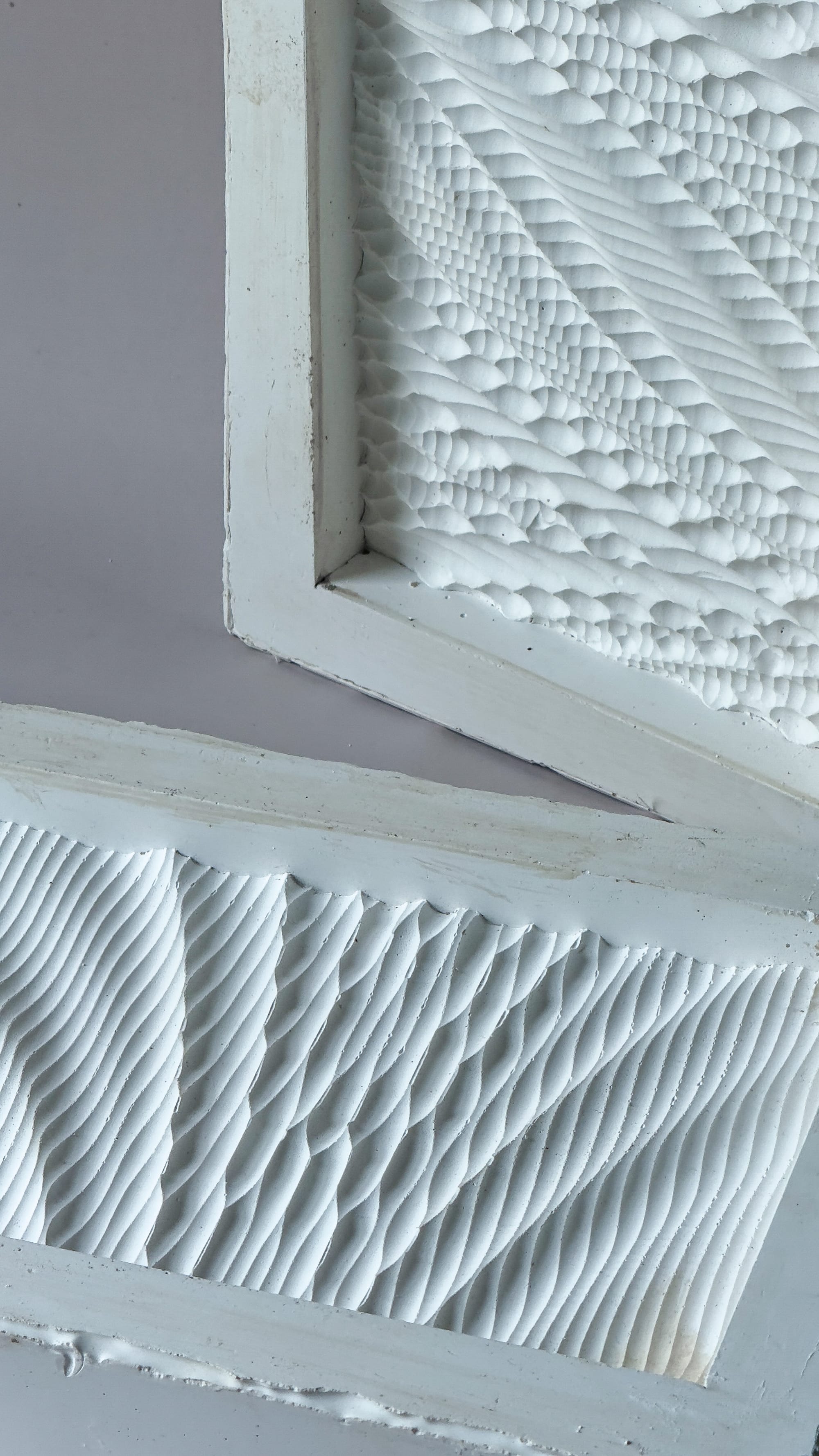
Plaster Moulds
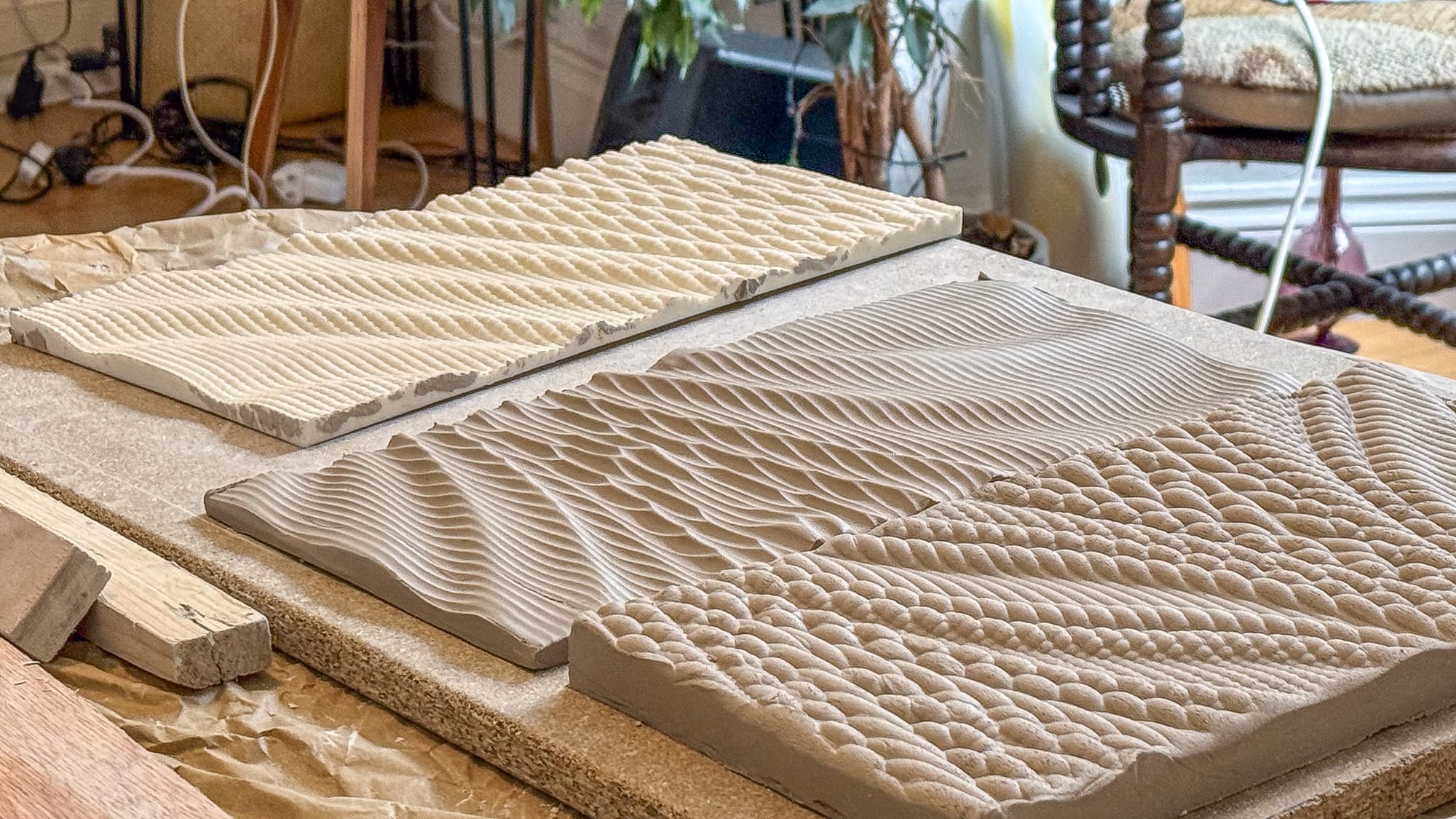
Plaster moulds, by contrast, were developed specifically for clay pressing and ceramic production in collaboration with ceramicist Maria Saeki. These moulds introduced a fundamentally different material behaviour, where moisture absorption, drying time, shrinkage, and firing all became active variables within the process. Rather than functioning as neutral containers for geometry, the moulds became part of a slower and more interpretive material transformation.
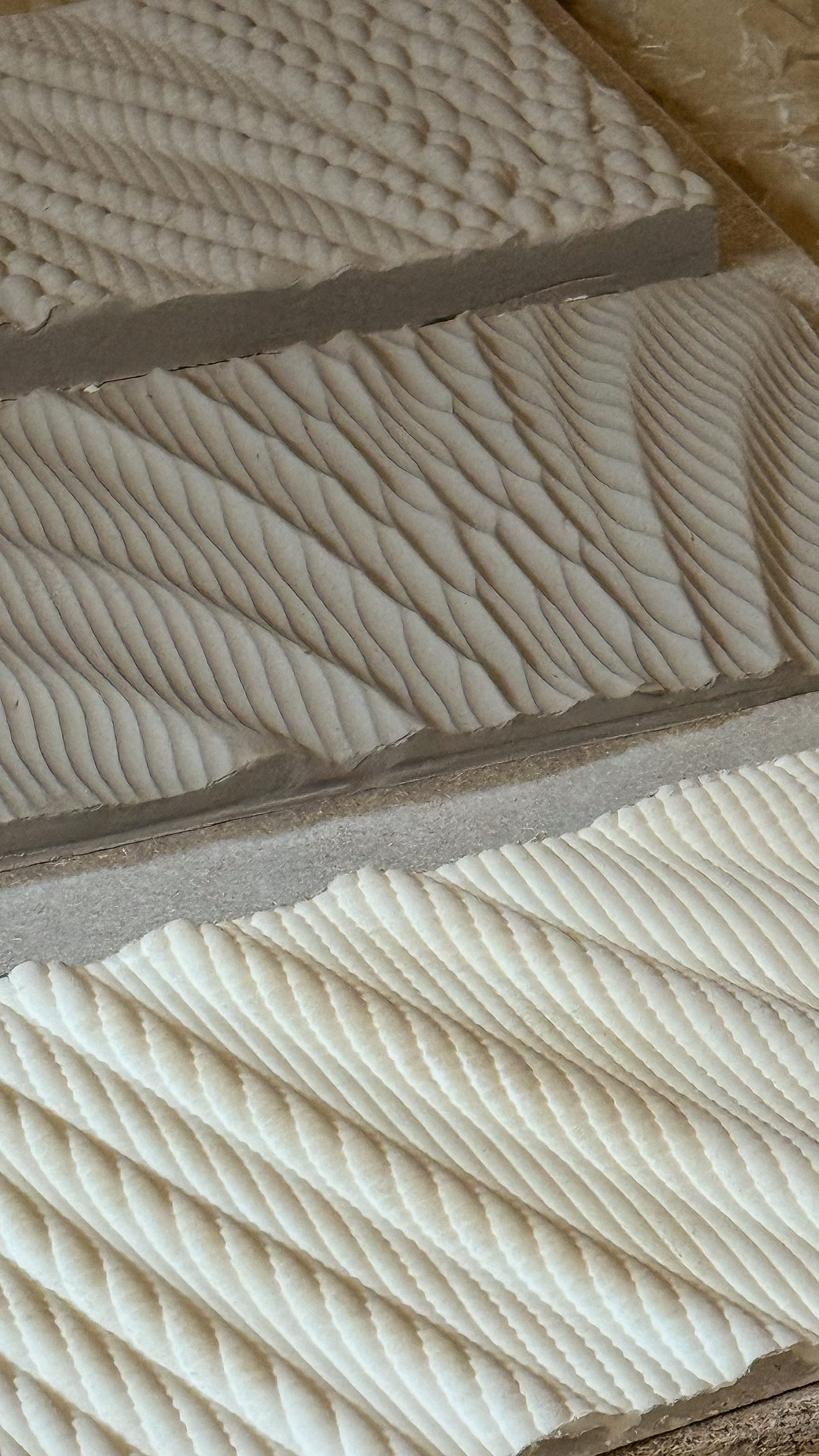
One of the more important discoveries during this phase was how mould making introduced polarity reversal directly into the pattern language itself. Positive geometries became negatives, convex surfaces became concave, and areas originally read as protrusions transformed into voids. This inversion was not simply technical, it fundamentally altered how the pattern behaved materially and visually.
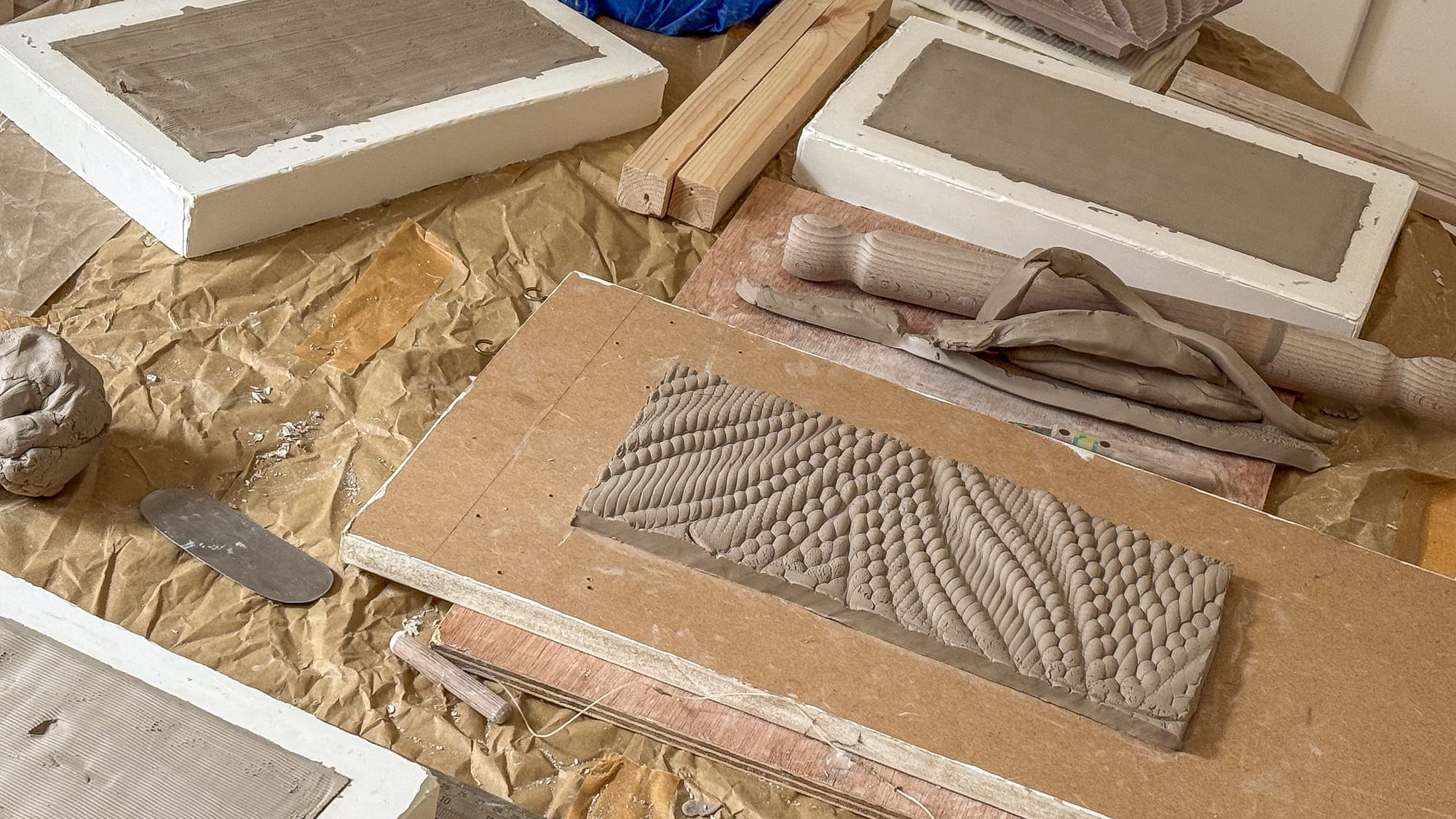
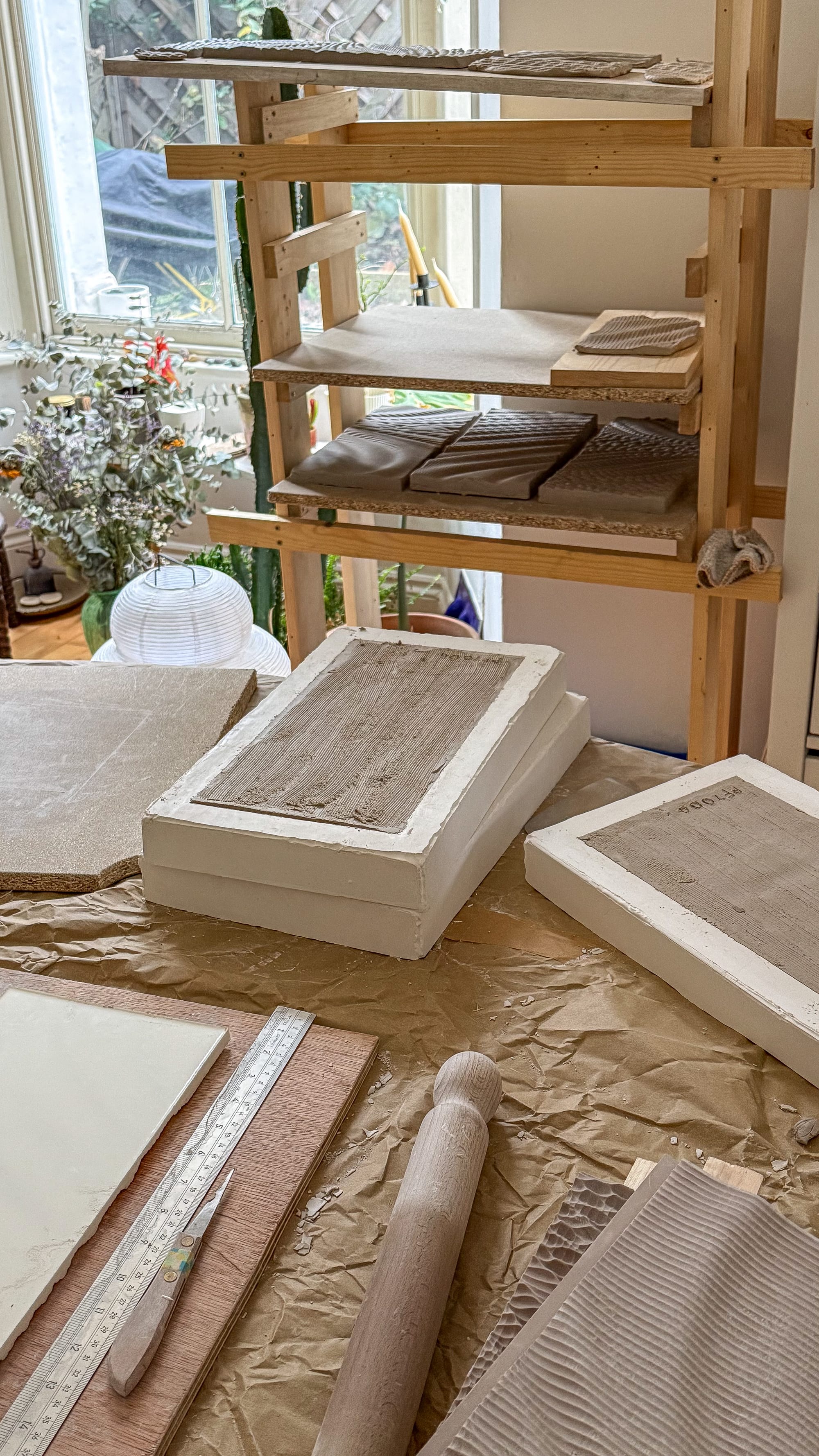
Clay Pressing
Clay Pressing
In ceramics, polarity reversal strongly affected glaze behaviour. Concave regions tended to pool and darken as glaze accumulated within recessed areas, while convex ridges exposed thinner glaze layers and sharper highlights. The same computational geometry could therefore produce entirely different visual readings depending on whether it existed as a positive or negative surface. Similar effects appeared in casting workflows, where shadows, edge sharpness, pigment accumulation, translucency, and reflectivity shifted significantly through inversion.
Resin Glazing
An unexpected development within the project was the use of epoxy resin as an alternative surface treatment inspired by ceramic glazing processes. While initially working through traditional ceramic glazing methods, particularly celadon and wood ash glazes, it became clear that many of the visual effects I was interested in were directly tied to how liquid material accumulated across topography. Concave regions pooled and deepened in tone, while convex ridges broke the surface tension and revealed sharper highlights. The geometry itself effectively controlled the behaviour of the finish.
This led me to begin experimenting with pigmented epoxy resin washes on cast plaster composites as a parallel process to ceramic glazing. Unlike kiln-fired glazes, epoxy could be manipulated with far greater immediacy and control, allowing multiple layers, selective pours, controlled flooding, tinting, sanding, and partial removal after curing. The process retained the logic of glaze pooling and surface accentuation, but detached it from the constraints of ceramic firing.
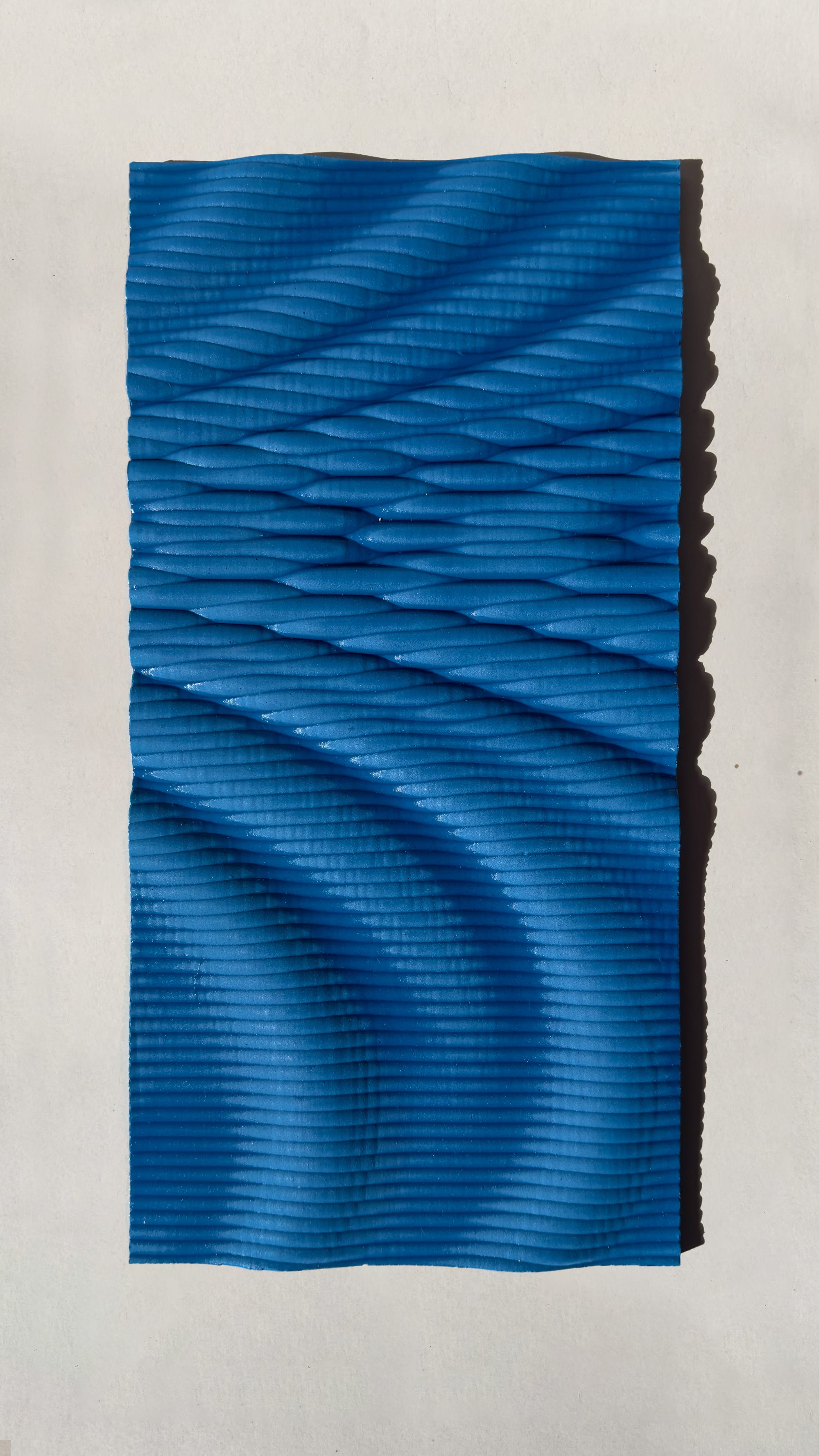
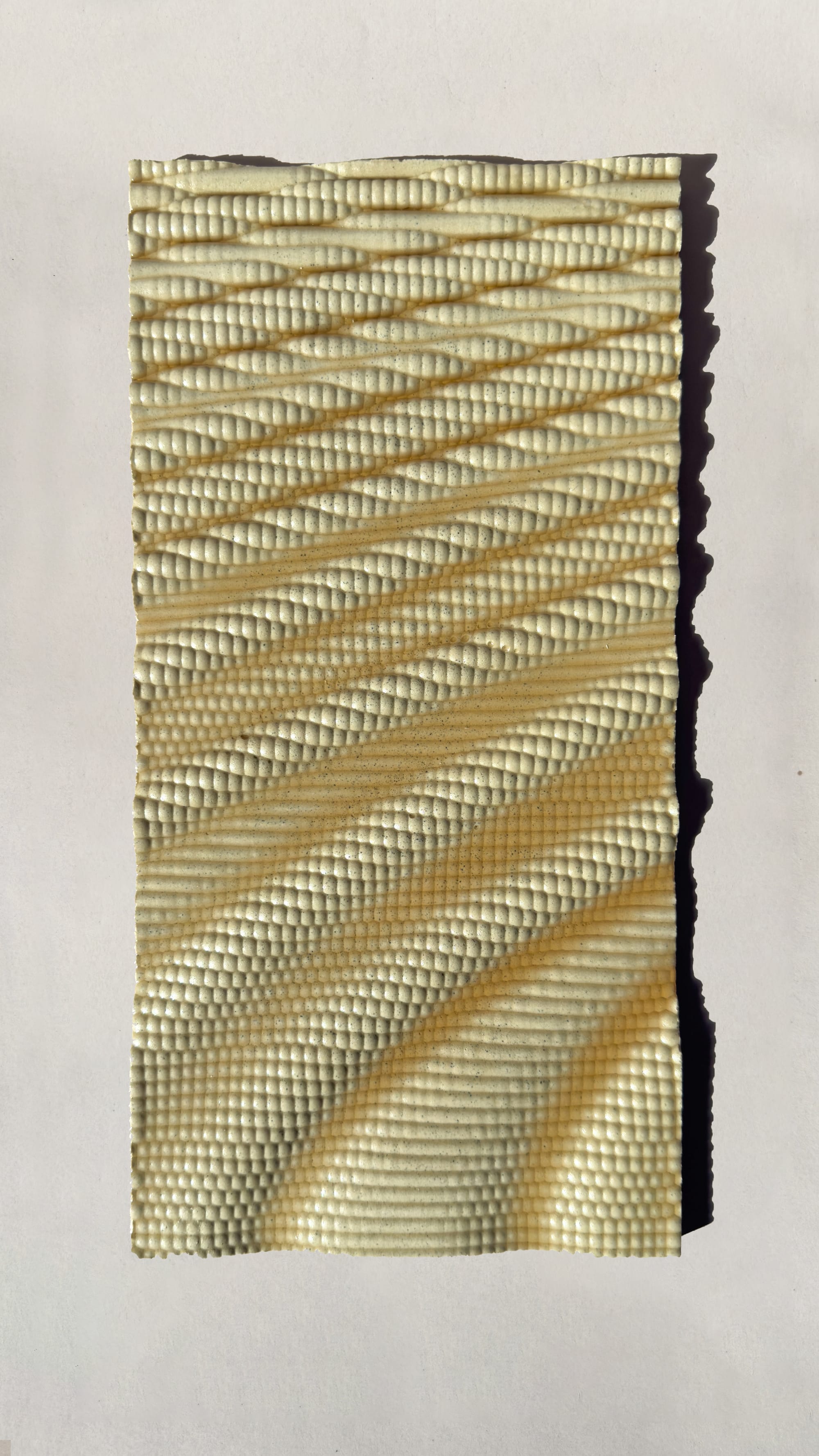
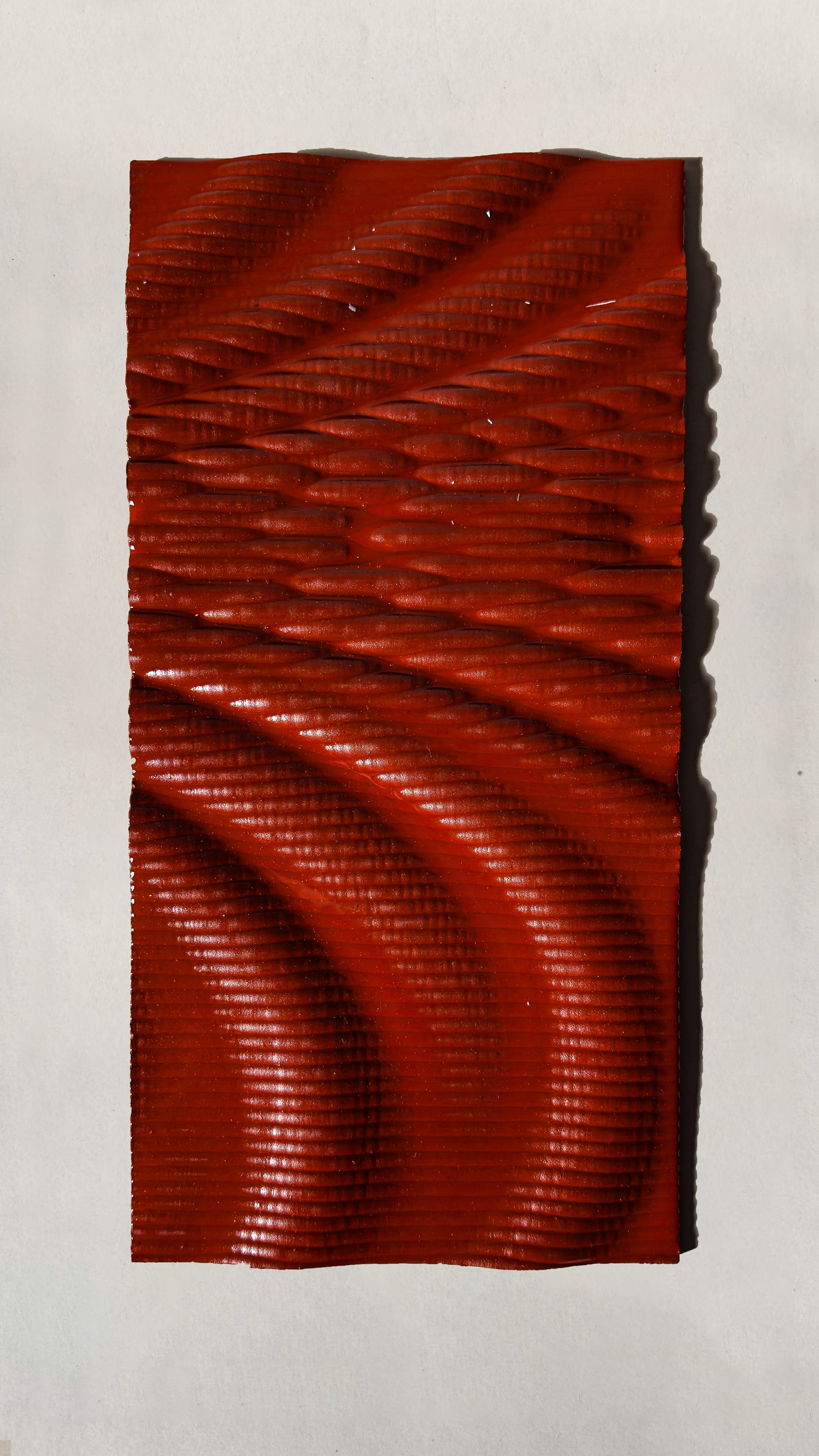
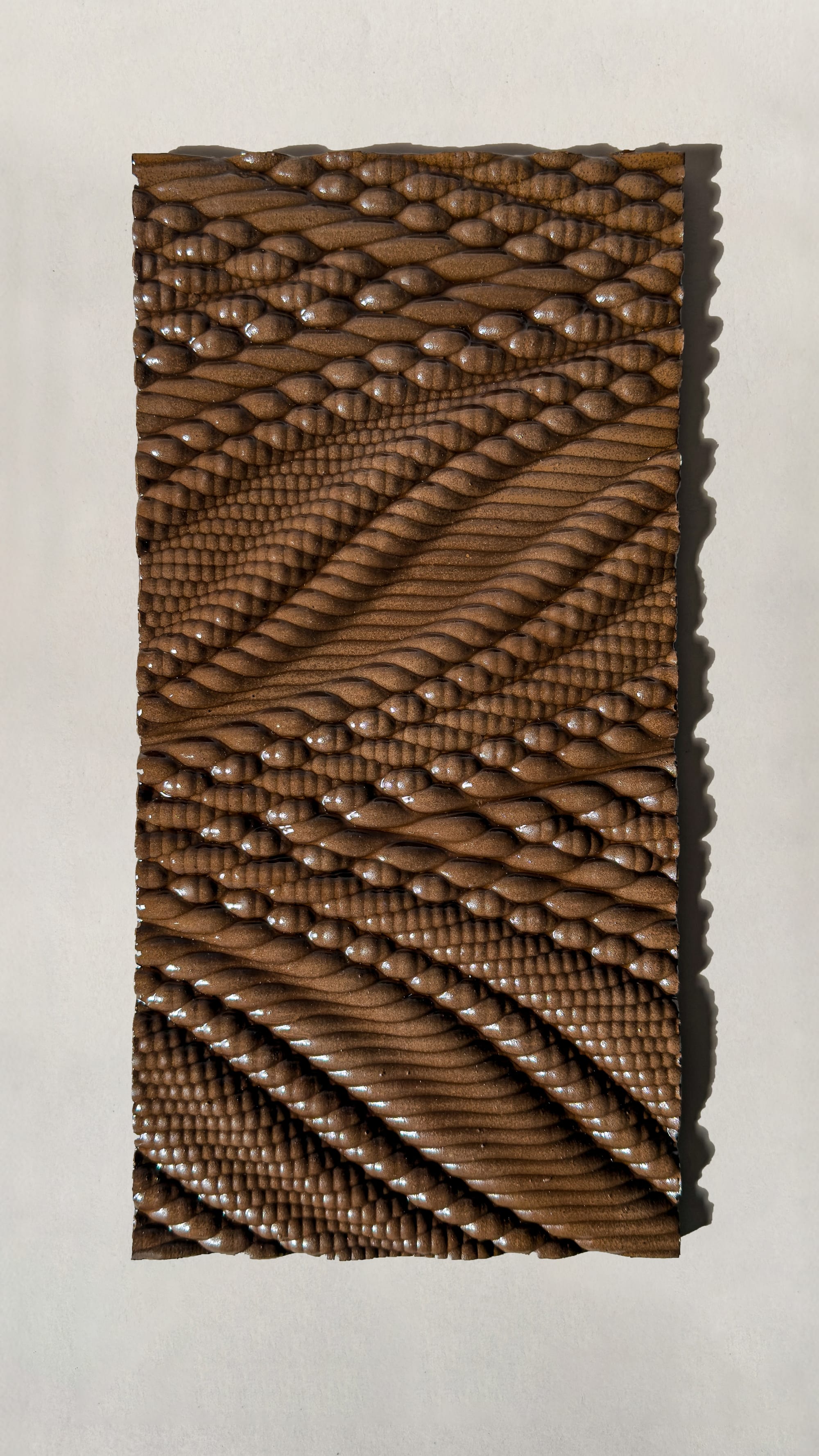
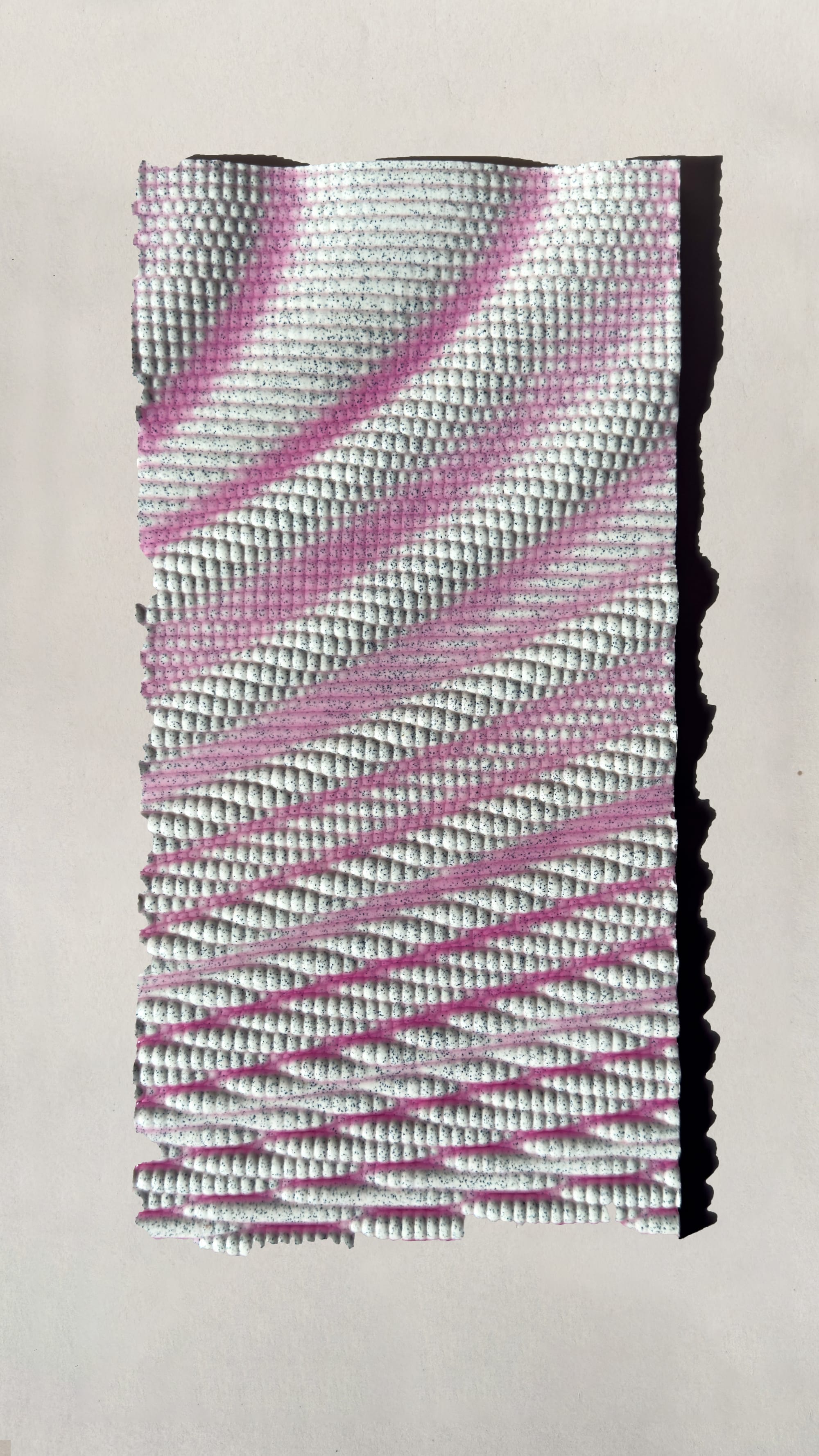
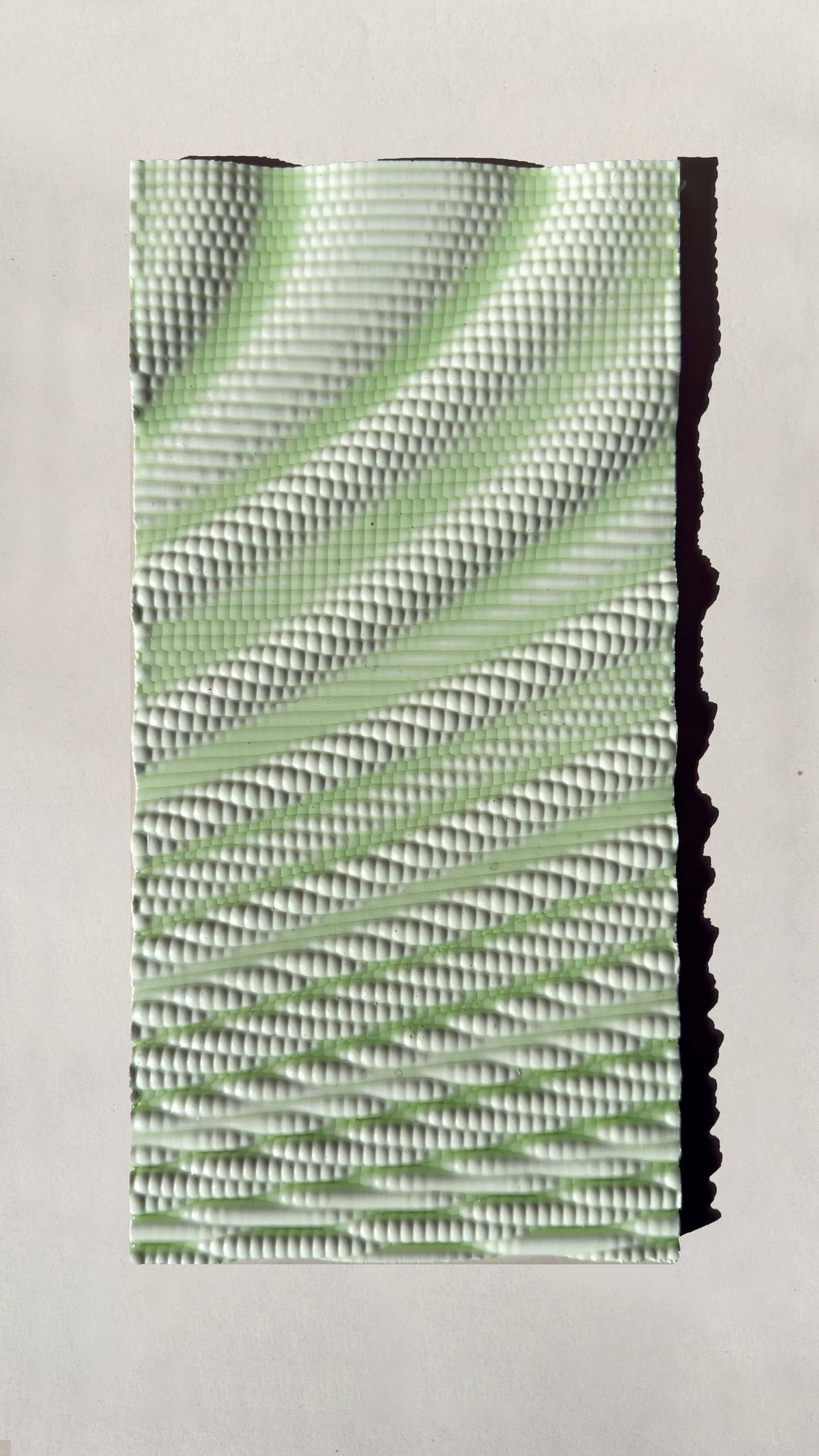
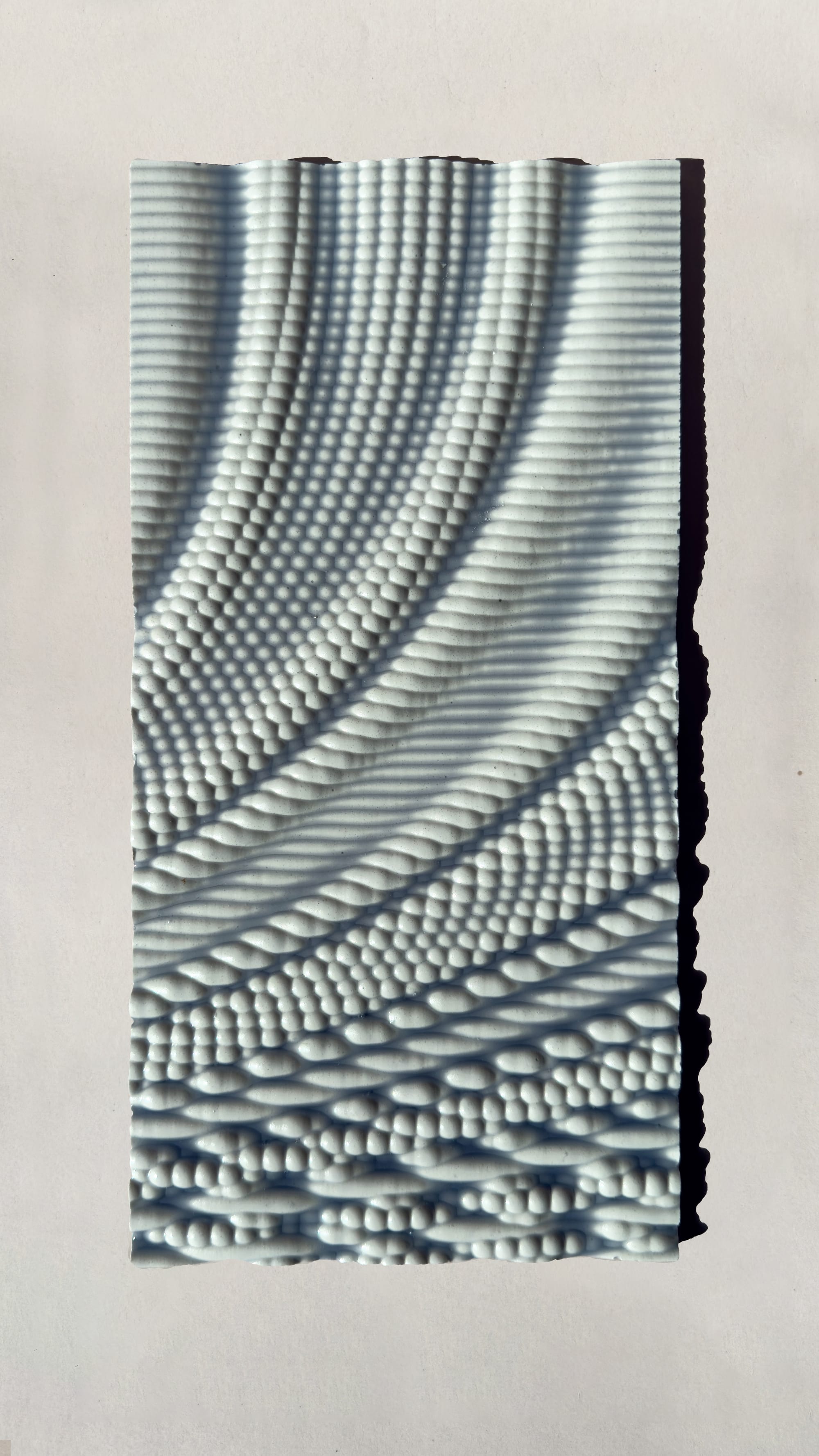
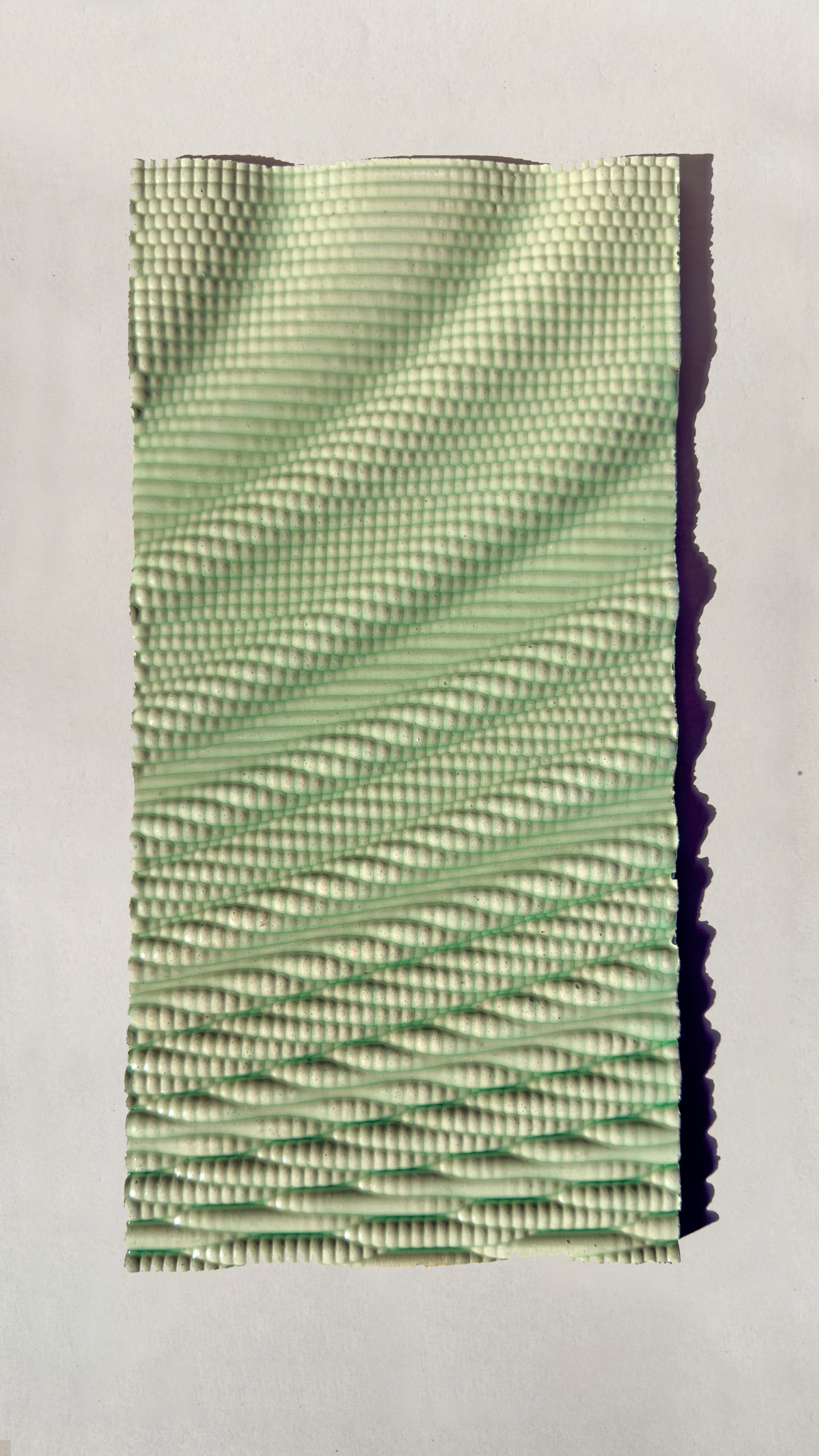
Another important outcome was understanding replication not as a process of producing identical copies, but as a branching system capable of generating families of materially distinct objects from the same computational source. A single positive could generate multiple moulds, which in turn could produce further positives with entirely different surface qualities, material behaviours, and visual outcomes.
Collaboration became especially important during this phase. Much of the learning emerged through workshop-based experimentation, fabrication failures, iterative testing, and technical conversations with specialists. The project therefore evolved not only through software development but through embodied making processes involving timing, touch, curing behaviour, and fabrication intuition.
Ultimately, the replicative process phase shifted the project away from a purely digital understanding of pattern and toward a more material and process-driven approach. The computational system remained constant, but each mould, material, and fabrication method interpreted that system differently. The resulting work exists somewhere between algorithmic control and material negotiation, where repetition becomes a mechanism for variation rather than standardisation.
This project was developed with support from Arts Council England through the Developing Your Creative Practice (DYCP) programme. The funding enabled a period of focused research and experimentation, exploring the translation of computational design systems into physical making processes.